2026 Top Commercial Drip Irrigation Manufacturers?
Commercial drip irrigation is becoming more important as farms face water shortages, rising labor costs, and stricter efficiency targets. In 2026, manufacturers are competing through emitter accuracy, filtration design, automation, recycled materials, and dependable technical support. This guide introduces leading commercial drip irrigation manufacturers and explains why their products deserve attention. Field reality matters. A polished catalog cannot replace stable flow in a dusty orchard or greenhouse.
The comparison considers tubing quality, pressure-compensating emitters, clog resistance, system scalability, and installation support. It also reviews research investment, manufacturing consistency, warranty terms, and distributor coverage. Evidence should come from technical specifications, field experience, certifications, and customer feedback rather than advertising claims alone. Questions remain. A company may perform well in vineyards but struggle with large vegetable operations. Another may offer advanced controllers but limited local service. These differences can change the true cost of ownership.
Readers will find a practical framework for comparing manufacturers across agriculture, nurseries, landscaping, and protected cultivation. The discussion highlights suppliers with strong engineering capabilities, proven production systems, and responsive after-sales support. It also considers regional water conditions, maintenance skills, and crop-specific requirements. Not every “top” manufacturer fits every project. The market changes quickly. Product availability, component pricing, and dealer quality may shift during 2026. This outline therefore treats rankings as informed evaluations, not permanent conclusions. Careful buyers should request performance data, inspect sample components, and test filtration compatibility before making a large investment. Even experienced teams can overlook small pressure losses that reduce uniformity across an entire field.
Commercial Drip Irrigation in 2026: Market Growth, Demand, and Key Metrics
Commercial Drip Irrigation in 2026: Market Growth, Demand, and Key Metrics
Commercial drip irrigation is expanding as farms face higher water costs, labor shortages, and irregular rainfall. Demand is strongest in orchards, vineyards, greenhouse crops, and high-value vegetables. Industry forecasts differ, but many project steady annual growth through 2030. Actual results depend on crop value, energy prices, and local water rules.
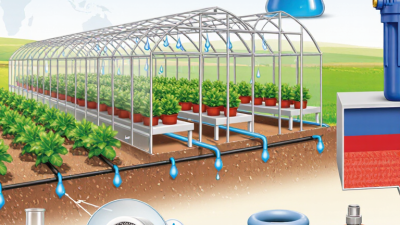
In field projects, three metrics deserve close attention: distribution uniformity, application efficiency, and maintenance hours. A well-designed system can deliver water near the root zone with limited surface evaporation. Pressure-compensating emitters help on uneven land. Filtration remains critical, especially where canals carry sand or organic debris. A clogged filter can quietly reduce yields.
Manufacturers serving this market are improving remote monitoring, flow sensors, and automated fertigation controls. Buyers should request measured performance data, not only catalog claims. Useful evidence includes seasonal flow records, emitter testing, warranty terms, and service response times. Payback calculations should include pumps, filters, labor, repairs, and replacement parts.
The market still has weaknesses.
Some farms install smart controls before fixing poor hydraulics. That adds complexity without solving uneven pressure. Pilot blocks are safer than full-site conversion. Record water use before and after installation. The numbers may challenge initial assumptions.
Drip Systems Use 30–50% Less Water Than Sprinklers in Field Crops
2026 Top Commercial Drip Irrigation Manufacturers?
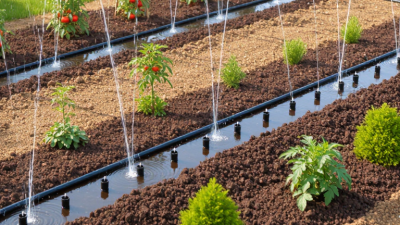
Field crops often waste water through evaporation, runoff, and uneven sprinkler coverage. Drip systems deliver water near the root zone. Industry guidance commonly reports 30–50% lower water use than sprinklers when systems are correctly designed and maintained. The actual result varies.
FAO data identifies agriculture as responsible for roughly 70% of global freshwater withdrawals. That pressure makes efficient irrigation more than a cost-saving feature. It becomes a production requirement. FAO-56 crop-water guidance also shows why timing matters: irrigation should match crop evapotranspiration, soil conditions, and growth stage. Too much water still wastes money.
Choosing a leading commercial manufacturer requires more than comparing catalog flow rates. Look for reliable filtration, pressure regulation, durable emitters, clear installation data, and responsive technical support. USDA NRCS engineering guidance commonly places well-designed drip application efficiency near 90–95%, compared with lower typical efficiencies for many sprinkler systems. Filters need regular cleaning. Small pressure differences can create dry rows.
Field reality is messier.
Clogged emitters happen. Poor maintenance can erase the promised savings. Independent trials, warranty terms, and local service capacity deserve careful review before purchasing.
A strong system should provide consistent moisture beside every plant, even across long field runs. That is where manufacturer quality becomes measurable.
Ranking Manufacturers by 90–95% Uniformity, Filtration, Pressure, and Scale
2026 Top Commercial Drip Irrigation Manufacturers?
A credible 2026 ranking should begin with measured performance, not advertising claims. Manufacturers should demonstrate 90–95% distribution uniformity under field conditions. Testing should include long lateral runs, uneven terrain, temperature changes, and practical operating pressures. Pressure-compensating emitters can reduce flow variation, but they are not magic. Poorly balanced zones still create dry areas.
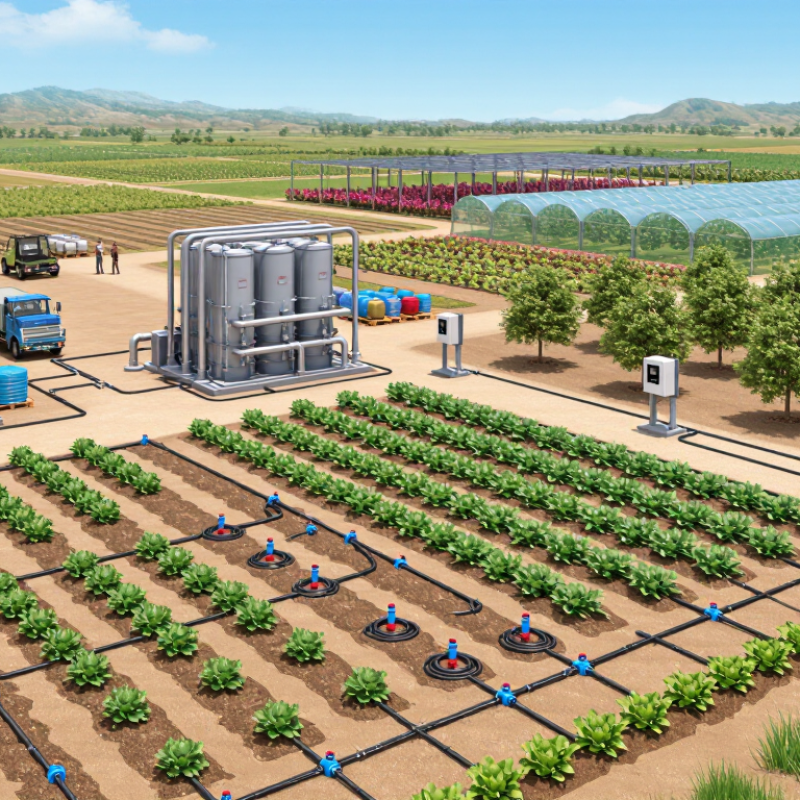
Filtration deserves equal weight. Screen, disc, or media systems must match water quality and project scale. A reliable manufacturer provides clear filtration guidance, flushing requirements, pressure-loss data, and replacement-part access. Commercial systems also need stable pressure control, accurate regulators, air-release valves, and durable connectors. Large farms require scalable designs, not simply more tubing. Independent field records are more convincing than attractive brochures.
Tips: Request uniformity maps from comparable installations. Check inlet and end-line pressure with gauges. Inspect filters after several irrigation cycles, especially when surface water is used. Ask how the system performs after repairs, expansion, and seasonal maintenance. A useful ranking should also examine training and technical support. No ranking is perfect. Local water chemistry and installation quality can change the outcome. That limitation should remain visible.
Total Cost of Ownership: 10–30% Yield Gains, Service, and Payback Periods
In 2026, leading commercial drip irrigation manufacturers should be judged by total cost of ownership, not purchase price alone. A system may deliver 10–30% higher yields when spacing, filtration, pressure, and scheduling match the crop. Results vary widely. Soil texture, water quality, climate, and operator skill can change the outcome.
A serious cost review includes pumps, filters, valves, controllers, labor, energy, repairs, and seasonal replacement. On a 40-hectare vegetable farm, a clogged filter can raise pressure loss and leave distant rows dry. That small failure may reduce uniformity before anyone notices it. Reliable service matters here. Local technicians, spare emitters, clear warranty terms, and remote diagnostics can prevent several days of lost production. Cheap equipment often becomes expensive when support is slow.
Payback should be calculated from measured savings and additional marketable yield. For example, a farm spending $90,000 on installation may recover $25,000 annually through lower water use, reduced pumping, and stronger output. The simple payback would be about 3.6 years. That number is useful, but imperfect. Labor rates can rise, crop prices can fall, and maintenance may be underestimated. Request field references, pressure-test records, and a five-year maintenance forecast before choosing a supplier. A practical trial on one block can expose uneven application, difficult flushing, or software problems before full-scale installation.