For global buyers, selecting an irrigation method involves more than comparing prices. Drip line irrigation delivers water close to each plant’s root zone. This targeted approach can reduce evaporation, runoff, and uneven wetting in many growing environments. From commercial vegetable fields to greenhouse benches, the system supports measured water delivery through emitters spaced for crop needs. Yet performance depends on design, filtration, pressure control, and installation quality. A low-cost roll can disappoint when its flow rate changes across a long row. That detail matters.
Experienced buyers usually examine material thickness, emitter structure, operating pressure, UV resistance, and connection compatibility. They also request test data, production samples, and clear guidance for storage and seasonal use. Reliable suppliers should explain tolerances instead of promising perfect results. They should discuss water quality, clogging risks, local climate, and maintenance routines. Practical trials reveal more than brochures. Evidence matters. A field test may expose weak seals, confusing markings, or difficult repairs before a large order is placed. Some decisions remain imperfect. Soil variation, labor availability, and changing water sources can alter the outcome. Therefore, global purchasing teams should compare lifecycle value, not only the initial quotation. This article examines why drip line irrigation attracts international buyers, where it performs well, and which questions deserve careful review. The goal is a realistic choice supported by evidence, technical understanding, and supplier accountability.
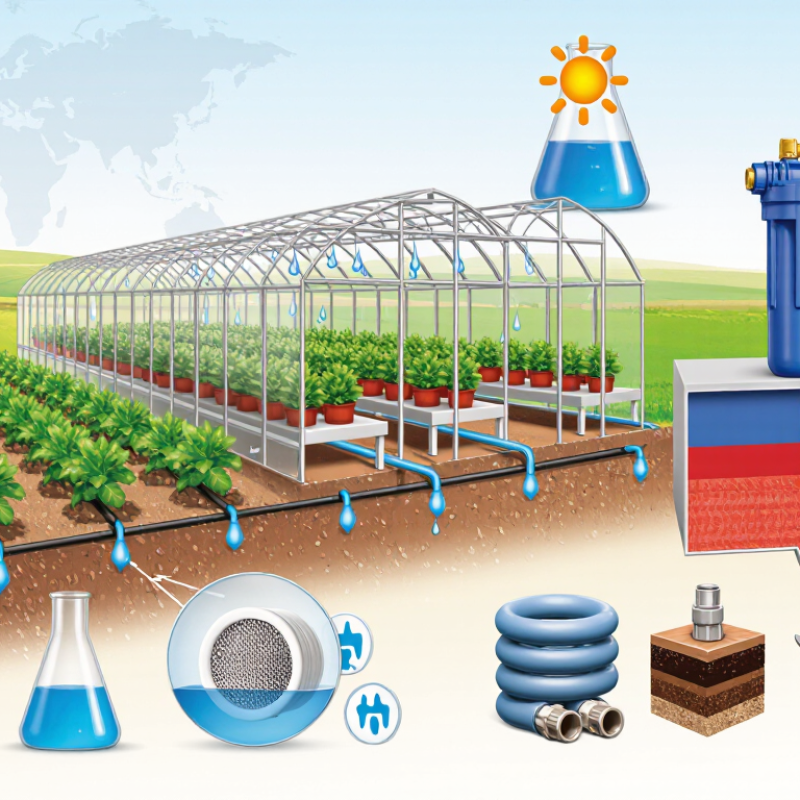
Drip line irrigation is a low-pressure watering method that delivers measured water near plant roots. A flexible tube carries water across a bed, orchard row, or greenhouse bench. Small emitters release droplets at regular intervals. The soil stays moist where roots need it. Not everywhere.
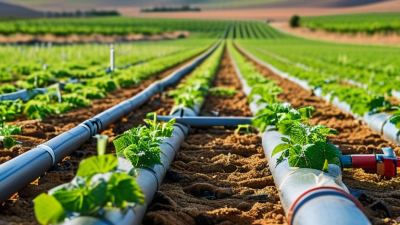
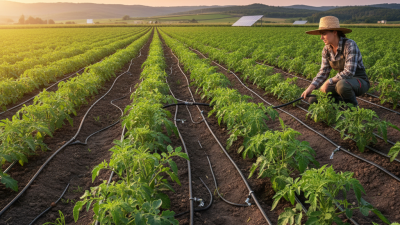
Water enters through a filter and pressure regulator before reaching the line. This protects emitters from sediment and reduces uneven discharge. In a vegetable bed, lines may run beside crop rows, often 20 to 40 centimeters apart.
Each emitter slowly wets a small soil zone, limiting evaporation and leaf wetting. That can reduce fungal pressure, but it does not replace crop monitoring. A blocked emitter can quietly stress one plant while nearby plants look healthy. This is a common weakness.
Global buyers should match line diameter, emitter spacing, flow rate, and wall thickness to local water quality and climate. Salty or muddy water demands stronger filtration and regular flushing. Sandy soil spreads moisture differently from clay, so spacing needs testing.
Installers usually check pressure at the farthest line, not only near the pump. A simple catch-cup test can reveal uneven flow. Drip irrigation is efficient, yet poor design wastes water and labor.
Small leaks matter. So does maintenance. During the first week, inspect wetting patterns, connectors, and plant response before expanding the system.
Drip lines improve water efficiency by delivering small, controlled flows near the root zone. This reduces evaporation, runoff, and deep drainage. FAO reports that agriculture accounts for about 70% of global freshwater withdrawals. Every avoided loss matters. The USDA NRCS National Engineering Handbook lists well-designed drip systems with application efficiencies near 90–95%. Actual results depend on pressure control, filtration, soil type, and installation quality. Not every field reaches the ideal figure.
Better moisture control can also support steadier crop growth. Water reaches roots instead of wetting the entire soil surface. Growers can apply fertilizer through irrigation, matching nutrients with crop demand. FAO Irrigation and Drainage Paper 56 recommends scheduling irrigation around crop evapotranspiration, weather, and growth stage. For global buyers, emitter spacing should match row distance and root distribution. Sandy soils may need shorter, more frequent irrigation. Heavy soils require slower applications. Small details matter.
Maintenance remains easy to underestimate. Clogged emitters create dry patches that satellite images may miss. Field checks, pressure testing, and regular filter cleaning protect uniformity. A cheaper line can become expensive when replacement labor rises. Buyers should request flow-rate data, operating-pressure ranges, material specifications, and field-performance evidence. Drip irrigation is efficient by design, but careful management makes the difference. Tensile strength alone does not prove crop performance.
Drip irrigation suits crops that need steady moisture near the root zone. Vegetables, berries, grapes, fruit trees, and many greenhouse crops respond well. Water moves slowly through emitters, reducing evaporation and leaf wetness. This matters in hot, dry climates with strong sunlight and limited rainfall. It also helps in sandy soils, where water drains quickly.
In humid regions, drip systems can still benefit crops that dislike wet foliage. Tomatoes, peppers, cucumbers, and strawberries may face fewer moisture-related leaf problems when water stays near the roots. However, drip irrigation is not automatically the best choice. Heavy clay can hold water too long, especially after rain. Salty water may also concentrate salts around emitters. Regular soil and water testing remains important. Growers sometimes overestimate savings when filters clog or pressure varies across long rows. That mistake is easy to miss.
Tips: Match emitter flow to soil texture and crop spacing. Use filtration before narrow outlets. Check wetting patterns with a small soil inspection. In windy areas, drip lines often outperform sprinklers. In freezing climates, drain exposed lines before winter. Keep records of irrigation time, weather, and plant response. A practical trial on one section can reveal problems before full installation.
Global buyers should examine drip lines beyond price and advertised flow rates. Start with the crop, soil, climate, and irrigation schedule. A vegetable bed may need different emitter spacing than an orchard row. For sandy soil, closer spacing can support more even wetting. Measure twice.
Check the line’s wall thickness, emitter flow, pressure range, and operating temperature. Thin tubing may reduce freight costs, but it can suffer during installation or repeated seasonal use. Ask for flow-test data, not only catalog figures. A reliable supplier should explain testing methods, material composition, and quality controls clearly. Request samples before placing a large order. Small samples can reveal stiffness, uneven emitters, or weak connections.
Water quality deserves careful attention. Suspended sand, algae, and mineral deposits can clog emitters quickly. Confirm the required filtration level and flushing method before purchase. Also inspect ultraviolet resistance if the lines will remain exposed to strong sunlight. Spacing, coil length, connector compatibility, and replacement availability affect labor costs after delivery. Packaging should protect tubing from crushing and extreme heat during transport. International buyers should verify applicable product documentation and import requirements in their market. Do not assume every line suits every field. That assumption is costly. A practical trial on one irrigation zone may expose pressure losses, difficult installation, or uneven discharge before the full order is committed.
| Evaluation Dimension | Typical Technical Information | Why It Matters to Global Buyers | What to Confirm Before Purchase |
|---|---|---|---|
| Water-saving potential | Drip irrigation applies water close to the plant root zone. Properly designed systems commonly achieve approximately 80–95% application efficiency, depending on layout, filtration, pressure control, climate, and maintenance. | Localized application can reduce evaporation, runoff, and unnecessary wetting between crop rows compared with less targeted irrigation methods. | Request the stated application-efficiency basis, recommended operating conditions, and field-design assumptions rather than relying only on a general water-saving claim. |
| Emitter discharge rate | Common agricultural emitter rates include approximately 0.5, 1.0, 1.6, 2.0, and 4.0 litres per hour (L/h), with the actual range varying by crop and system design. | The discharge rate affects irrigation duration, pump sizing, lateral length, and the amount of water delivered to each plant. | Check the nominal flow rate, test pressure, permitted flow variation, and whether the emitter is pressure-compensating or non-pressure-compensating. |
| Emitter spacing | Typical agricultural spacing may range from about 10 cm to 100 cm or more. Close spacing is often used for dense or closely planted crops, while wider spacing may suit orchards or widely spaced plants. | Incorrect spacing can create dry zones, excessive overlap, or uneven wetting, particularly in different soil textures. | Match spacing to crop geometry, root development, soil infiltration rate, row spacing, and whether the line will be installed on the surface or below ground. |
| Operating pressure | Many thin-wall drip lines operate at relatively low pressures, often around 0.5–1.5 bar, while the correct range depends on emitter design, wall thickness, line length, and system components. | Pressure that is too low may reduce uniformity; pressure that is too high can damage the line or cause excessive discharge. | Confirm the recommended inlet pressure, maximum working pressure, pressure-regulator requirement, and pressure-loss data for the proposed lateral length. |
| Filtration requirement | Drip emitters have small flow passages and generally require filtration. Common guidance is to select filtration according to the smallest emitter passage and water quality; screen or disc filters are widely used. | Sand, algae, organic matter, and mineral particles can clog emitters and reduce irrigation uniformity. | Obtain the recommended mesh or micron rating, filter-flow capacity, flushing procedure, and water-quality limits for suspended solids, iron, and biological material. |
| Wall thickness and durability | Wall thickness is commonly specified in mil or millimetres. Thin-wall seasonal lines are lighter and easier to install, while thicker-wall lines generally offer greater resistance to handling, abrasion, and repeated use. | The appropriate construction depends on whether the product is intended for one season, multiple seasons, surface use, subsurface use, or mechanized installation. | Confirm wall thickness, tensile strength, puncture resistance, UV exposure rating, expected service life, and compatibility with installation equipment. |
| Material and UV resistance | Polyethylene is widely used for drip lines because it is flexible, corrosion-resistant, and suitable for common agricultural operating conditions. UV resistance depends on formulation and exposure. | Climate, sunlight intensity, temperature, agrochemicals, and storage conditions can affect line life and performance. | Request material specifications, UV-stabilization information, temperature limits, chemical-compatibility guidance, and relevant test reports. |
| Flow uniformity | Uniformity is influenced by emitter manufacturing variation, pressure changes, elevation, line length, temperature, and clogging. A commonly used field indicator is distribution uniformity (DU), which should be verified under operating conditions. | Higher uniformity helps deliver a more consistent water and nutrient supply across the field. | Ask for flow-variation data, pressure-discharge curves, recommended maximum lateral length, and test conditions used for the results. |
| Chemical and fertigation compatibility | Drip systems can distribute soluble fertilizers through injection equipment, but compatibility depends on chemical concentration, water chemistry, temperature, exposure time, and flushing practices. | Fertigation can place nutrients near the root zone while reducing field traffic, but incompatible chemicals may damage components or increase clogging risk. | Verify chemical-compatibility limits, injection and backflow-prevention requirements, flushing time, and local regulations for fertilizer use. |
| Climate and soil suitability | Drip irrigation can be used in sandy, loamy, and clay soils, but emitter spacing, discharge rate, irrigation frequency, and run time must be adapted to infiltration and water-holding characteristics. | A design suitable for sandy soil may cause narrow wetting patterns, while the same design may cause excessive surface wetting in heavy clay soil. | Provide soil texture, slope, crop type, climate data, water source, and seasonal irrigation demand before selecting the line specification. |
| Installation and connection system | A complete system normally includes a pump or pressurized source, filter, pressure regulator, mainline, submain, valves, connectors, end closures, and flushing points. | The drip line cannot perform reliably if fittings leak, pressure is uncontrolled, or the line cannot be flushed effectively. | Confirm outside diameter, inside diameter, fitting compatibility, connector dimensions, valve requirements, and availability of replacement parts in the destination market. |
| Roll length and logistics | Commercial rolls may be supplied in different lengths, commonly from several hundred metres to more than 2,000 metres, depending on wall thickness, diameter, and production configuration. | Roll dimensions affect container utilization, unloading equipment, warehouse space, installation speed, and landed cost. | Confirm roll length tolerance, roll diameter, gross weight, pallet configuration, loading quantity, packaging method, and export documentation. |
| Standards and quality control | Relevant requirements may include ISO 9261 for agricultural irrigation emitters and emitting pipe, together with applicable national regulations, dimensional tolerances, and quality-control procedures. | Independent or documented testing helps buyers compare products using consistent technical criteria across different markets. | Request current test reports, inspection records, batch traceability, material declarations, and confirmation of compliance with destination-country requirements. |
| Total cost of ownership | Total cost includes the line, fittings, filtration, pumping energy, labour, maintenance, replacement frequency, transport, duties, and disposal or recycling costs. | A lower purchase price may result in higher operating costs if the product requires frequent replacement, has poor uniformity, or clogs easily. | Compare landed cost per hectare or acre, expected service life, maintenance requirements, warranty terms, spare-part availability, and installation labour. |
| Sustainability and end-of-life handling | Plastic irrigation products should be collected and managed according to local waste rules. Recyclability depends on material composition, contamination, collection systems, and available recycling facilities. | Responsible end-of-life handling can reduce agricultural plastic waste and support compliance with environmental requirements. | Ask about material identification, take-back or recycling options, packaging reduction, and destination-market environmental obligations. |

Note: Technical ranges are general agricultural reference values. Final selection should be based on a site-specific hydraulic design, water-quality test, crop requirements, soil conditions, and applicable local standards.
For global buyers, drip line quality begins with measurable performance, not attractive packaging. Check wall thickness, emitter spacing, flow rate, and pressure tolerance. Request laboratory data and test samples from different production batches. Small variations can create dry crop zones. That matters in sandy soil.
Look for uniform discharge across the full line length. A reliable product should resist clogging when water contains fine sediment or fertilizer residue. Ask about filtration requirements, ultraviolet resistance, and operating pressure. Inspect connectors, seals, and end closures as well. These small parts often fail first. Field experience shows that a sample can perform well while a later batch performs differently. Batch records and independent testing reduce that uncertainty.
Cost evaluation should include freight, filters, installation labor, replacement rates, and disposal. The cheapest line may become expensive after repeated leaks. Compare cost per irrigated hectare, not only cost per roll. Supplier reliability also deserves practical checks. Review production capacity, quality-control procedures, export documents, response times, and after-sales support. A pilot order is useful before a large contract. Ask difficult questions and record the answers. I would still avoid absolute promises. Weather, water quality, and installation skills can change results, even with careful purchasing.
Drip line irrigation typically delivers higher water-use efficiency and application uniformity than sprinkler or surface irrigation. These representative benchmark midpoints are useful for global buyers when comparing product quality, lifecycle cost, filtration needs, and supplier reliability. Buyers should verify emitter uniformity, pressure performance, warranty terms, spare-part availability, and delivery records before purchase.