Who Are the Top Garden Drip Irrigation Suppliers in China?
Choosing reliable garden drip irrigation suppliers in China requires more than comparing product prices. It demands evidence about water efficiency, material quality, factory experience, and after-sales support. FAO’s AQUASTAT data indicates that agriculture accounts for roughly 70% of global freshwater withdrawals. This figure explains why efficient irrigation equipment matters, even in small residential gardens.
The global drip irrigation market is expanding, according to reports from MarketsandMarkets and Grand View Research. However, market growth does not automatically prove supplier reliability. That distinction matters. A factory may offer low-cost emitters, yet inconsistent flow rates can waste water and damage plants. Simcha Blass, the Israeli irrigation pioneer associated with modern drip irrigation, reportedly observed, “The tree was growing because of the water leaking from the pipe.” His observation helped inspire controlled, low-volume irrigation systems.
In this guide, we examine leading Chinese suppliers through practical criteria. These include emitter uniformity, pressure-compensation performance, filtration design, tubing durability, certifications, production capacity, and export experience. We also consider whether suppliers provide installation guidance and replacement parts. Small details matter. A blocked filter can quietly reduce the system’s effectiveness.
The assessment is not perfect. Public supplier data can be incomplete, and factory claims require verification. Buyers should request samples, technical sheets, test results, and independent references before placing large orders. The strongest garden drip irrigation supplier is not always the cheapest. It is the company that delivers consistent performance under real garden conditions.
China’s Garden Drip Irrigation Market and 90–95% Water-Use Efficiency
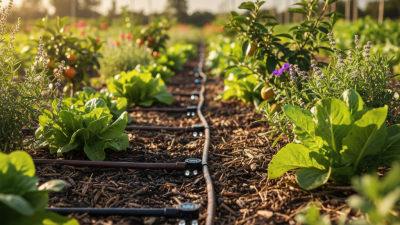
China’s garden drip irrigation market has grown around practical water-saving needs. Suppliers commonly provide emitters, filters, valves, tubing, and small control systems for gardens and landscape projects. In well-designed installations, water-use efficiency can reach 90–95%. This figure is realistic only when pressure, filtration, spacing, and maintenance work together. A supplier should explain test conditions instead of presenting efficiency as a permanent promise.
From field experience, clogged emitters remain a common problem. Fine soil, algae, and mineral deposits can reduce flow within weeks. Reliable manufacturers usually offer flow-rate data, material specifications, installation guidance, and sample testing. Ask whether the tubing performs consistently under different pressures. Also check fitting strength after repeated assembly. A low price may look attractive, but uneven watering can waste more water later. The 95% figure can sound too neat. Gardens are rarely perfect.
Tips: Choose emitters according to plant size and soil type. Install a suitable filter before the mainline. Flush the system regularly, especially after dusty construction work. Use a pressure regulator where water pressure changes sharply. Measure output from several emitters with a small container. This simple check often reveals hidden imbalance. Keep records during hot and windy weeks. Supplier support matters when adjustments become necessary.
Garden Irrigation Water-Use Efficiency in China
Drip irrigation generally achieves about 90–95% water-use efficiency by delivering water directly to the plant root zone. Conventional surface irrigation typically has lower efficiency because of evaporation, runoff, and uneven distribution.
Leading Supplier Categories: Emitters, Tubing, Filters, Pumps, and Controllers
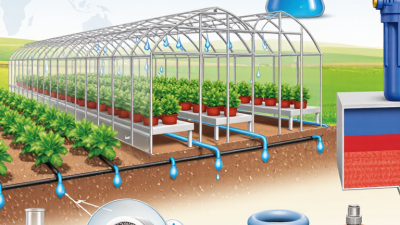
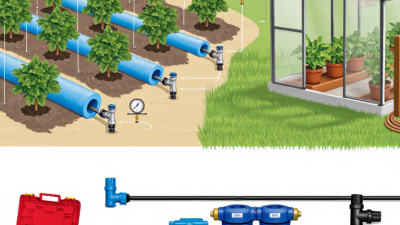
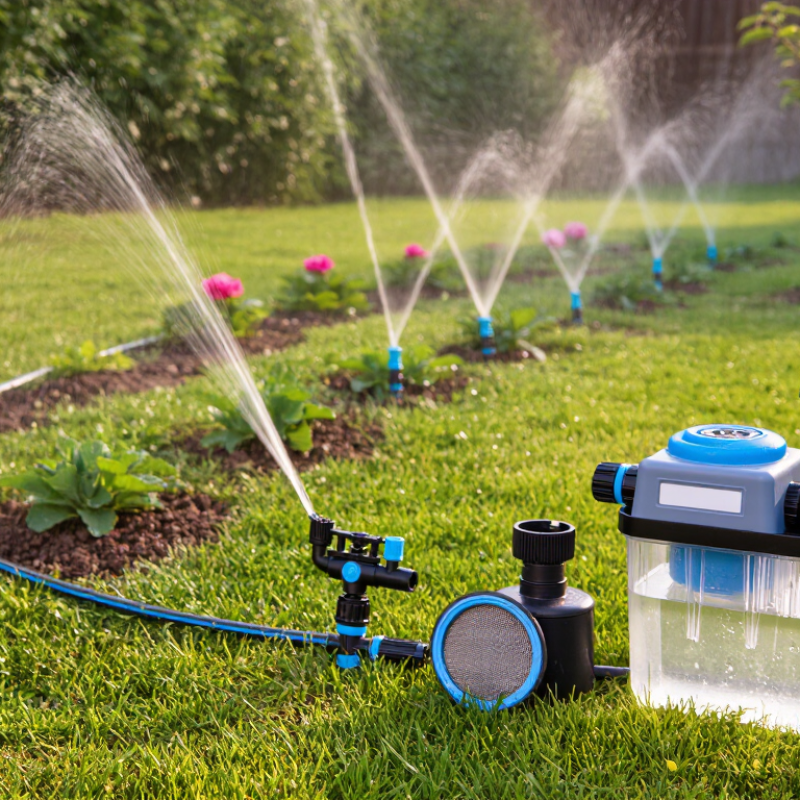
China’s garden drip irrigation suppliers usually specialize in five connected categories: emitters, tubing, filters, pumps, and controllers. The strongest suppliers understand how these parts work as one system, not as isolated products.
Emitters control water delivery at each plant. Reliable suppliers provide stable flow rates, pressure compensation, and clear performance data. Tubing should resist sunlight, cracking, and repeated bending. During field testing, I check wall thickness and connector fit by hand. Small leaks often appear at joints, not along the tube.
Filters deserve serious attention in areas using ponds or hard water. Disc and screen options suit different debris levels. A supplier should explain mesh ratings, cleaning methods, and replacement access. Pumps must match flow, lift, and power conditions. Oversized pumps waste energy and may damage thin tubing. Undersized pumps create dry zones. It happens more often than expected.
Controllers add timing, moisture sensing, and zone management. Look for simple programming and clear fault alerts. Complicated controls can frustrate small garden operators. Supplier credibility comes from factory audits, batch records, product testing, and responsive technical support. Ask for pressure-flow curves, material specifications, and sample units before placing a large order. No supplier gets every detail right. Independent testing still matters.
Comparing Chinese Suppliers by 30–50% Water-Saving Performance
When buyers compare Chinese garden drip irrigation suppliers, water-saving claims need careful testing. A reported 30–50% reduction is possible, but it depends on the baseline system, soil, crop, and weather.
The strongest suppliers usually provide pressure-compensating emitters, reliable filters, and clear flow-rate data. Field experience shows that uniform watering matters more than impressive brochure numbers. A system delivering 2 liters per hour should remain close to that rate across the whole line. Buyers should request independent test reports, installation records, and crop-based results. Supplier support also matters. Good technical teams explain flushing, pressure control, and seasonal maintenance in practical terms.
Some suppliers achieve near 30% savings in small gardens with basic upgrades. Reaching 50% requires accurate scheduling, leak control, and suitable emitter spacing. These figures are not universal. Sandy soil, sloped beds, and strong wind can change results quickly. I would question any supplier promising identical savings everywhere. The comparison is still imperfect, because many trials use different hose lengths and watering habits. A better evaluation uses the same plot, water meter, pressure, and growing period. Ask for three months of records, not only laboratory data. Reliability appears in the details: stable fittings, clean packaging, responsive replacement service, and instructions that gardeners can actually follow.
Technical Benchmarks: 1–4 L/h Emitters and 16 mm Drip Lines
China’s top garden drip irrigation suppliers should be judged by measured performance, not catalog claims. For 16 mm drip lines, buyers should verify outside diameter, wall thickness, spacing, and pressure limits. ISO 9261 provides a useful benchmark for agricultural emitters and micro-irrigation components.
A 1–4 L/h emitter range suits many gardens, beds, and small orchards. Lower flows reduce runoff in sandy soil. Higher flows can serve deeper-rooted plants, but only with stable pressure. Pressure matters. Suppliers should provide discharge tests at several pressures, commonly around 1 bar. Check the coefficient of variation too. A CV near or below 0.07 indicates strong manufacturing uniformity under standard testing conditions.
FAO AQUASTAT reports that agriculture represents roughly 70% of global freshwater withdrawals. That figure makes emitter accuracy more than a sales detail. A reliable Chinese supplier should show batch records, filtration guidance, and laboratory results. For small emitters, filtration around 120 mesh is often recommended, although water quality changes the requirement. Field installers should also inspect connectors for leakage after thermal expansion. Small errors compound.
A practical weakness remains: factory data may not reflect hard water, algae, or uneven terrain. Ask for samples, then test them for several weeks. Measure outlet flow with a graduated cylinder. It is simple, but useful. Suppliers offering clear tolerances, pressure-compensating options, and traceable quality control deserve closer attention than those offering only low prices.
Who Are the Top Garden Drip Irrigation Suppliers in China? - Technical Benchmarks: 1–4 L/h Emitters and 16 mm Drip Lines
| Evaluation Dimension |
Common Technical Benchmark |
What to Verify with a Supplier |
| Emitter flow rate |
1, 2, and 4 L/h are common nominal options for garden drip irrigation. |
Confirm the rated flow at the stated test pressure; request measured flow data for each emitter option. |
| Drip-line diameter |
16 mm nominal outside diameter is a widely used size for garden drip lines. |
Check outside diameter, wall thickness, coil length, and compatibility with the intended fittings. |
| Wall construction |
Wall thickness varies by product type and intended service. Thin-wall drip tape and thicker-wall drip tubing are different product classes. |
Ask for the stated wall thickness and intended operating conditions rather than comparing products by diameter alone. |
| Emitter spacing |
Spacing is product-specific; commonly offered options range from about 10 cm to 60 cm. |
Match spacing to plant layout, soil infiltration, and the required wetted pattern. |
| Operating pressure |
Permitted pressure depends on the emitter and line design; there is no single rating suitable for every 16 mm product. |
Request the operating-pressure range and pressure-flow specifications for the exact model. |
| Flow uniformity |
Uniformity depends on emitter design, manufacturing consistency, line length, pressure, and installation. |
Ask for test results across multiple emitters and along a representative line at the specified pressure. |
| Filtration guidance |
Filter requirements depend on emitter passage size and water quality; a fine filter is commonly needed for drip systems. |
Request the recommended filter rating and guidance for water containing sediment or organic matter. |
| Connection compatibility |
16 mm lines are used with compatible barbed connectors, tees, valves, and end closures. |
Confirm actual line dimensions and test fittings for secure connection and leakage under operating pressure. |
| Quality documentation |
Product specifications and test methods should be clearly documented and traceable to the supplied model. |
Request a technical data sheet, batch identification, inspection records, and applicable test reports. |
| Supplier comparison |
Compare suppliers using the same flow rate, pressure, spacing, line construction, and test conditions. |
Evaluate documented performance and sample results; do not compare nominal figures measured under different conditions. |
Supplier Selection Criteria: Certifications, MOQ, Capacity, and Export Records
Who Are the Top Garden Drip Irrigation Suppliers in China?
Choosing a Chinese drip irrigation supplier requires more than comparing prices. Agriculture consumes about 70% of global freshwater withdrawals, according to FAO AQUASTAT. Efficient emitters therefore deserve serious testing. Ask for ISO 9001 quality certification, ISO 14001 environmental certification, and compliance with ISO 9261 for emitting pipes. Certificates should match the factory’s legal entity and current production site. A certificate alone proves little.
MOQ can expose hidden risks. A low MOQ may suit a small greenhouse, but it can increase unit costs and reduce customization options. Request samples from the same production line used for bulk orders. Review wall thickness, flow uniformity, filter compatibility, and ultraviolet resistance. Capacity claims need evidence. Ask for monthly output, active production lines, lead times, and recent quality records. I have found that attractive capacity figures sometimes describe theoretical output, not available output.
Tips: Check three samples, not one. Use an independent laboratory when the project is large.
Export records add useful context. Verify shipment history through customs databases, audited documents, or buyer references. UN Comtrade data can help compare a supplier’s declared export activity with market patterns. However, export volume does not guarantee product quality. Some suppliers serve traders rather than end users. That distinction matters. Request redacted invoices, destination regions, repeat-order evidence, and after-sales procedures. My own selection process is still imperfect; price pressure can distort judgment. A documented scoring sheet helps keep emotions out.