China Top Commercial Drip Irrigation Suppliers?

China’s commercial drip irrigation sector deserves careful evaluation, not simple price comparison. The Food and Agriculture Organization reports that agriculture uses about 70% of global freshwater withdrawals. That figure makes emitter uniformity, filtration, and pressure control business-critical factors.

Market reports also show continued growth in precision irrigation. However, forecasts differ widely because they define “smart irrigation” differently. Buyers should examine methodology before trusting impressive numbers. In a large greenhouse, a clogged filter can leave dry rows visible within hours. A cheaper system may then become the expensive choice.

Peter G. McCornick, an irrigation and water-management expert at the International Water Management Institute, has repeatedly promoted the principle of “more crop per drop.” That principle fits commercial drip irrigation, but only partly. Hardware alone cannot deliver efficient production. Design calculations, water testing, fertigation control, maintenance training, and after-sales support matter equally.

This guide introduces leading Chinese suppliers through a practical lens. It considers factory experience, product certifications, pressure-compensating emitters, tubing consistency, automation compatibility, and export service. It also reviews evidence from FAO AQUASTAT, USDA irrigation guidance, and published market research.

Some supplier claims remain difficult to verify. That is worth admitting. Factory scale does not always prove field reliability. A polished catalog cannot replace independent testing, farm references, and sample performance data. The strongest shortlist should therefore balance technical evidence, operating experience, and transparent communication.
China Top Commercial Drip Irrigation Suppliers?

What Defines a Commercial Drip Irrigation Supplier in China?

A commercial drip irrigation supplier in China is more than a factory with colorful catalogs.
It should understand crop spacing, water pressure, filtration, and seasonal demand. Experienced suppliers ask about field size, water quality, soil type, and installation conditions before recommending products. That conversation matters. A suitable system for a greenhouse may fail in an open field with sandy soil.

Reliable suppliers usually control key production stages, including raw material inspection, extrusion, punching, assembly, and pressure testing. They should provide measurable details, such as emitter flow rate, wall thickness, operating pressure, and roll length. Batch records and sample reports also help buyers trace product quality. A factory visit can reveal practical facts that brochures hide, including storage conditions and testing equipment.

Commercial projects often require custom spacing, connector sizes, packaging, and delivery schedules. A capable supplier can adjust production without weakening consistency. It should also explain installation limits clearly, rather than promise universal performance. In field evaluations, small issues often become expensive: uneven filtration, weak fittings, or unclear flushing instructions. A catalogue can look perfect. It is not proof.

Trust develops through samples, documented tests, responsive communication, and realistic after-sales support. Some suppliers meet the technical standard but respond slowly when installation problems appear. That weakness deserves attention. Buyers should compare field references, inspection procedures, and warranty terms before placing large orders.

Which Drip Irrigation Products Do Leading Suppliers Provide?

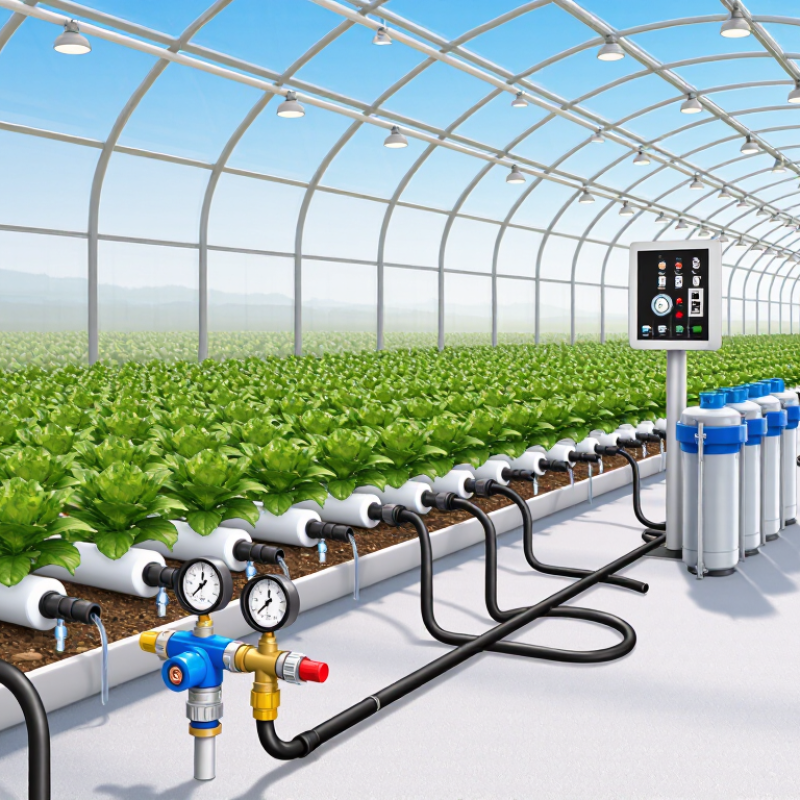
China’s leading commercial drip irrigation suppliers usually provide complete product ranges, not isolated emitters. Their catalogs often include pressure-compensating drippers, inline drip tape, dripline, filters, valves, fittings, injection units, and irrigation controllers. Some also produce custom molds for large agricultural projects.

Experienced suppliers support crops such as vegetables, orchards, cotton, nurseries, and greenhouse plants. They may offer different flow rates, wall thicknesses, spacing options, and pressure ranges. Reliable manufacturers usually conduct flow testing, pressure testing, and leakage inspections before shipment. These checks matter when a field covers hundreds of rows. A small blockage can affect an entire harvest.

Product quality still varies. A polished catalog does not prove long-term performance. Buyers should request sample rolls, test reports, installation guidance, and clear warranty terms. Suppliers with practical engineering experience can recommend filtration levels and flushing methods for local water conditions. No design is perfect. Soil, water quality, and maintenance habits can change the result.

Tips: Match emitter flow to crop demand and soil texture. Confirm connector sizes before ordering. Test samples under real pressure when possible. Ask whether replacement parts remain available after installation. Avoid choosing only by the lowest price; thin tubing may save money initially but require earlier replacement.

China Top Commercial Drip Irrigation Suppliers? - Which Drip Irrigation Products Do Leading Suppliers Provide?

Product Category Common Commercial Specifications Typical Application Main Performance Features Recommended Operating Conditions Common Compliance or Quality Checks
Inline Drip Irrigation Tape Wall thickness commonly 0.15–0.40 mm; emitter spacing typically 10–40 cm; nominal flow rates often 0.6–2.0 L/h per outlet. Annual vegetables, field crops, nurseries, and short- to medium-season crops. Low material cost, compact storage, uniform discharge, and easy seasonal installation. Clean filtered water; working pressure commonly about 0.5–1.0 bar, depending on tape design and length. Wall-thickness consistency, outlet spacing, flow-rate uniformity, seam strength, and leak testing.
Inline Dripline Typical outside diameter 12–20 mm; emitter spacing commonly 20–60 cm; flow rates frequently 0.8–4.0 L/h per emitter. Orchards, vineyards, greenhouses, landscaping, and multiseason row crops. Greater durability than thin-wall tape, reliable emitter placement, and suitability for repeated use. Operating pressure commonly 0.7–2.5 bar; pressure-compensating versions are used on uneven terrain. Emitter discharge uniformity, pressure-compensation range, tensile strength, and resistance to clogging.
Pressure-Compensating Drippers Common nominal outputs include 1.6, 2.0, 4.0, and 8.0 L/h; inlet sizes often 4 mm or 16 mm, depending on format. Sloping orchards, vineyards, greenhouse containers, and long irrigation laterals. Maintains comparatively stable flow across a defined pressure range and improves irrigation uniformity. Often designed for approximately 1.0–3.5 bar; the exact compensation range must be verified for each model. Flow-versus-pressure testing, diaphragm recovery, pressure-compensation range, and labyrinth cleanliness.
Non-Pressure-Compensating Drippers Common outputs range from 1.0–8.0 L/h; available as button, stake-mounted, or inline formats. Level ground, small plots, potted plants, landscaping, and simple irrigation systems. Simple construction, economical pricing, and straightforward installation and maintenance. Best performance on relatively level areas with stable pressure and correctly sized laterals. Nominal flow accuracy, outlet dimensions, connection security, and clogging resistance.
Micro-Sprinklers Typical flow rates 20–200 L/h; wetted diameters commonly 2–8 m; working pressure often 1.5–3.0 bar. Orchards, nurseries, frost protection, greenhouse benches, and soil cooling. Provides a broader wetted area than point-source drippers and can support root-zone coverage. Requires appropriate pressure regulation, stable risers, and filtration suited to the nozzle or spinner. Discharge rate, spray pattern, radius, rotation performance, material durability, and wind sensitivity.
Disc or Screen Filters Common filtration ratings include 120 mesh, approximately equivalent to 130 microns; larger systems may use multiple filter grades. Protection of drip tape, driplines, emitters, and micro-sprinkler nozzles. Removes suspended particles and reduces clogging when correctly sized and maintained. Filter selection depends on water quality, emitter passage size, flow rate, and allowable pressure loss. Filtration grade, maximum flow, pressure rating, sealing performance, pressure-loss curve, and cleanability.
Fertilizer Injectors Venturi and proportional injectors are commonly selected according to system flow, injection ratio, and pressure differential. Fertigation, acid dosing, water treatment, and injection of soluble agricultural inputs. Allows nutrients or approved treatment chemicals to be distributed through the irrigation network. Requires compatible chemicals, backflow protection, pressure control, and thorough line flushing. Injection accuracy, chemical compatibility, pressure differential, valve integrity, and backflow prevention.
Polyethylene Mainlines and Laterals Common nominal sizes include 16, 20, 25, 32, 40, 50, and 63 mm; wall thickness varies by pressure class and application. Water conveyance from the pump or filter assembly to irrigation zones and emitters. Flexible installation, corrosion resistance, low weight, and compatibility with compression fittings. Pipe pressure class, burial conditions, temperature, water hammer, and hydraulic friction must be considered. Outside diameter, wall thickness, pressure rating, ovality, tensile strength, and leak resistance.
Connectors and Control Valves Typical fittings include take-offs, joiners, tees, end flush valves, ball valves, pressure regulators, and air-release valves. System assembly, zone control, flushing, pressure management, and maintenance access. Enables modular installation and helps control pressure, air accumulation, and line cleaning. Components must match pipe diameter, thread standard, pressure rating, and water chemistry. Dimensional accuracy, thread compatibility, seal performance, operating torque, and pressure testing.

Note: Specifications shown are commonly used commercial ranges for drip irrigation equipment. Actual flow rates, pressure limits, filtration requirements, and dimensions vary by product design and should be confirmed against the supplier’s technical datasheet before selection.

How Chinese Suppliers Compare in Quality and Manufacturing

China Top Commercial Drip Irrigation Suppliers?

Chinese drip irrigation suppliers vary widely in quality and manufacturing discipline. Experienced buyers should inspect more than product photos. A reliable factory measures emitter flow at different pressures, checks wall thickness, and records leakage rates. These details reveal whether production is controlled or simply fast.

Many established manufacturers use automated extrusion lines and injection molding equipment. They can produce consistent tubing, filters, connectors, and pressure-compensating emitters. Quality assurance often includes sampling, pressure testing, dimensional checks, and aging tests under heat and sunlight. Ask for recent test records, not only standard certificates. Certificates may describe capability, but they cannot prove every shipment is consistent.

Field testing remains essential. In commercial farms, uneven flow can create dry rows, clogged emitters, and higher labor costs. Request samples from current production, then test them with local water conditions. Some suppliers offer impressive specifications but provide weak after-sales support. Others communicate well but lack strong testing procedures. That difference matters. I have also seen buyers focus too heavily on the lowest quotation. It seemed efficient, yet replacement costs later changed the calculation. A factory audit, production sample, and clear inspection agreement usually provide stronger evidence than promises.

Which Agricultural Sectors Do Top Suppliers Serve?

China’s leading commercial drip irrigation suppliers serve more than open-field grain farms. Their systems support vegetables, cotton, sugarcane, orchards, vineyards, nurseries, and protected greenhouse crops. This range reflects water pressure across agriculture. UN-Water’s World Water Development Report 2024 states that agriculture uses about 70% of global freshwater withdrawals. FAO also reports that irrigated agriculture produces roughly 40% of global food on about 20% of cultivated land.

Field-crop projects usually need long lateral lines, durable emitters, filters, and fertigation equipment. Vegetable growers often require precise spacing and short irrigation cycles. Fruit farms need pressure-compensating emitters on uneven slopes. Greenhouses demand cleaner water control because blocked emitters can damage an entire crop zone within hours. Suppliers also serve landscaping and commercial nurseries, although these sectors may require different flow rates and automation. A common assumption is that higher flow always improves results. It does not. Poor filtration, unsuitable water chemistry, or weak installation can waste water and reduce yields.

Tips: Match emitter flow to soil texture, crop roots, and field slope. Request test data for filtration, pressure stability, and clogging resistance. Review local service capacity, not only equipment prices. The International Organization for Standardization emphasizes consistent irrigation component performance, yet field conditions vary widely. That gap deserves attention. A technically strong system can still underperform when workers lack training or maintenance routines. Supplier selection should therefore include agronomic guidance, spare parts, and practical commissioning support.

How to Choose the Right Chinese Drip Irrigation Supplier

Choosing a Chinese commercial drip irrigation supplier requires more than comparing catalog prices. Start with your crop, field size, water source, pressure range, and seasonal labor capacity. A reliable supplier should recommend suitable tube thickness, emitter spacing, filtration, and pressure control. Ask for technical drawings, test data, and a clear replacement policy. Do not accept “universal” designs. They often hide important assumptions.

Tips: Request samples from the same production line used for bulk orders. Test them with your water for several weeks. Measure flow at the first and last lateral. Check clogging after filtration and inspect connectors under pressure. Review factory quality procedures, export experience, production capacity, and staff response time. Certifications can support trust, but verify their scope and validity. A certificate alone proves little.

Compare quotes by total operating cost, not unit price. Confirm minimum order quantities, packaging, lead times, spare parts, installation guidance, and after-sales training. Ask how claims are recorded and resolved. Keep written specifications. A pilot order is safer than a large commitment. Supplier evaluation remains imperfect; sample performance may not reflect every batch. Independent inspection adds confidence, especially for large farms. Choose a supplier that explains limitations clearly, not one promising effortless results.