Water is becoming a stricter design constraint for gardens, hotels, campuses, and public landscapes. The FAO AQUASTAT database indicates that agriculture represents about 70% of global freshwater withdrawals. Landscape irrigation is not identical to farm irrigation, but the pressure is shared. Every leaking connector, oversized zone, or clogged emitter matters.
This guide examines the top 10 landscape drip irrigation systems for global buyers. The comparison focuses on emitter consistency, filtration, pressure control, installation flexibility, maintenance, and regional availability. EPA WaterSense guidance also highlights the value of efficient irrigation design, proper scheduling, and regular inspection. These principles remain useful, whether a project uses recycled water, municipal supply, or a small storage tank.
Technical credibility matters here. ISO 9261 specifies performance and testing requirements for agricultural emitters and emitting pipes. It offers a practical reference when reviewing product claims, although landscape conditions can be less predictable. A rooftop planter behaves differently from a sandy hotel garden. A compact residential kit may fail on a long commercial run.
There is no perfect system.
Industry forecasts from Grand View Research and MarketsandMarkets show continued growth in drip irrigation, driven by water scarcity, urban development, and controlled irrigation demand. However, market size estimates vary because companies define “drip irrigation” differently. Buyers should therefore inspect specifications, warranty terms, replacement parts, and local technical support rather than trust rankings alone.
The systems reviewed here are not chosen by price only. They are assessed against real installation details: uneven terrain, hidden tubing, hard water, seasonal pressure changes, and maintenance access. Some recommendations may deserve further testing. That is part of responsible buying.
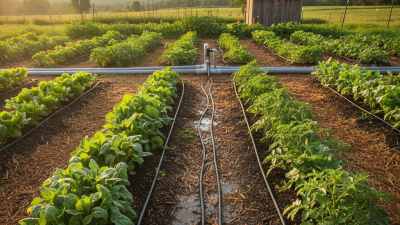
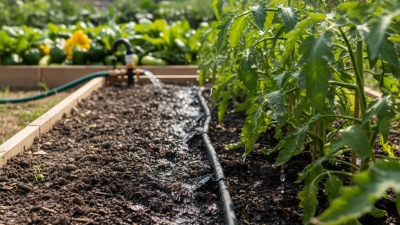
Landscape drip irrigation is a low-pressure method that delivers water directly to planted areas through small emitters. It serves beds, hedges, trees, and containers with less exposed spray. A typical system contains a source connection, filter, pressure regulator, mainline, lateral tubing, emitters, valves, and end flush points. Moisture sensors or controllers may add scheduling accuracy, but they do not fix poor hydraulic design. The filter matters. FAO AQUASTAT data place agriculture near 70% of global freshwater withdrawals, making efficient landscape use commercially important. US EPA WaterSense describes well-designed drip irrigation as up to 90% efficient in delivering water to roots.
Core functions include metering flow, limiting pressure, reducing runoff, and maintaining root-zone moisture. A 2-liter-per-hour emitter, for example, releases water slowly beside a shrub instead of flooding its canopy. Emitter spacing must match soil texture and plant demand. Sandy soil may need closer applications. Clay soil needs slower cycles. These are practical distinctions. The USDA NRCS National Engineering Handbook warns that application efficiency depends on design, maintenance, and operating conditions. That 90% figure is not guaranteed. Clogged emitters, pressure variation, buried tubing, and careless scheduling can produce dry roots beside saturated soil. Global buyers should request filtration ratings, pressure ranges, flow data, UV resistance, and service instructions. A clean specification helps. A site audit still decides whether it works.
Top 10 Landscape Drip Irrigation Systems for Global Buyers
Major Types of Drip Irrigation Systems for Landscape Applications
Landscape drip irrigation is not one universal system. Point-source emitters deliver water slowly to individual trees, shrubs, and container plants. They suit uneven planting layouts and allow simple flow adjustment. Inline dripline places fixed emitters inside the tubing. It works well for hedges, narrow beds, and repeated groundcover rows. Subsurface dripline stays below mulch or soil, reducing evaporation and visual clutter. It needs careful installation, flushing, and root intrusion control. Pressure matters.
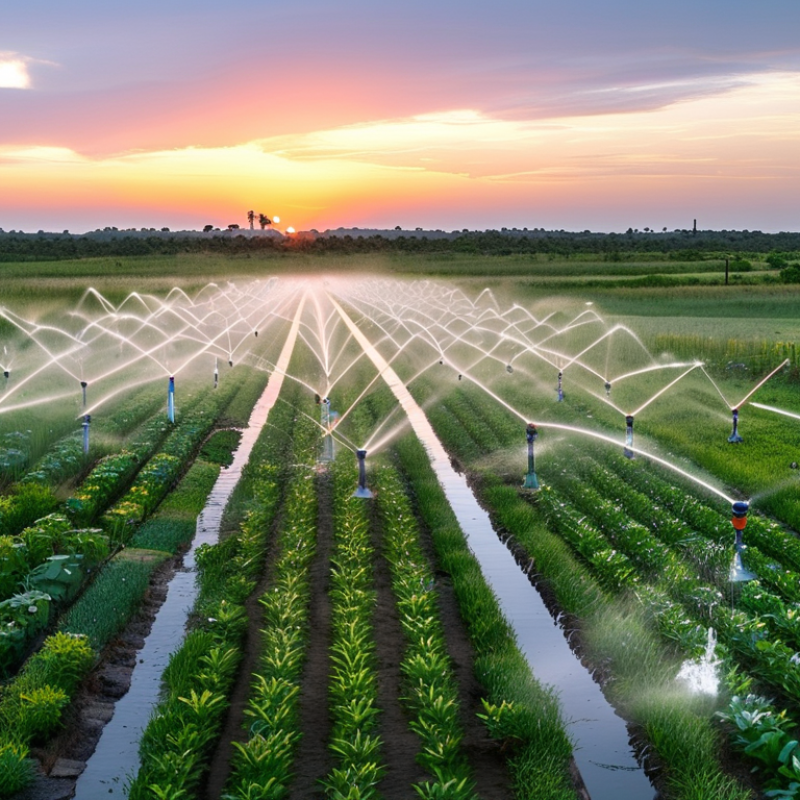
Micro-bubblers and micro-sprays cover wider soil areas around young trees or dense flower beds. They can be useful where roots spread broadly, but wind may reduce uniformity. A reliable design considers soil texture, slope, water pressure, filtration, and seasonal demand. Field installers often discover that sandy soil needs shorter, more frequent cycles. Clay soil may require slower application and longer pauses. A system can look efficient on paper and still disappoint.
Tips: Check emitter flow before final installation. Use pressure regulation and filters suitable for the water source. Flush lines at accessible ends, especially after construction. Keep emitters away from trunks to reduce disease risk. Review local water rules and winterization needs before exporting or installing equipment. Small details matter.
Evaluating the top ten landscape drip irrigation systems for global purchasing requires more than comparing catalog prices. A buyer should examine emitter spacing, flow rate, pressure range, filtration needs, and tubing durability. These details determine whether water reaches roots evenly across sandy beds, clay soil, or sloped gardens. I have found that a system performing well in a small test plot may struggle after long shipping, storage, or installation delays. That lesson is easy to miss.
Request documented flow tests, material specifications, and installation guidance before approving a supplier. Look for pressure-compensating emitters when terrain changes, and check whether filters are accessible for routine cleaning. Ask how replacement parts are packed and identified. Small labels matter. Global purchasing also demands careful review of package dimensions, currency, lead times, warranty terms, and technical support hours. A low unit price can become expensive when connectors fail or instructions arrive only in an unfamiliar language. Published claims still require samples or independent checks.
Compare all ten systems under the same conditions: identical pipe lengths, inlet pressure, water quality, and operating time. Measure discharge from the first, middle, and final emitters. Record clogged outlets, leaks, and pressure loss after repeated cycles. Certifications can support credibility, but their scope and issuing body deserve verification. Regional climate, import requirements, and installer skill also influence the result. My evaluation would include a small reserve budget, because field assumptions are often wrong. A careful buyer may reject the highest-rated system if its service network cannot support the installation location.
Top 10 Landscape Drip Irrigation Systems for Global Buyers
Installation, Maintenance, and Water Management Requirements
Reliable drip irrigation begins with correct zoning, filtration, and pressure control. Divide planting areas by soil type, slope, and sun exposure. Place emitters near root zones, not against plant stems. Uneven pressure can leave one bed wet and another visibly dry. The U.S. EPA WaterSense program reports that drip irrigation can reach about 90% efficiency when properly designed. FAO’s AQUASTAT data also indicates that agriculture accounts for roughly 70% of global freshwater withdrawals. Landscape projects still need similar discipline.
Maintenance is not optional. Inspect filters weekly during dusty seasons. Flush lateral lines until discharge runs clear. Check clogged emitters with a pressure gauge, not only by looking. A small leak may waste water for months. Soil moisture sensors can improve scheduling, but sensor placement remains imperfect. One sensor cannot represent an entire garden. Weather-based controllers should be adjusted after rain, wind, or unusual heat. The Irrigation Association recommends regular audits because real performance often differs from design calculations.
Tips: Start with a short test cycle. Place a cup beneath several emitters and compare collected water. Record pressure, flow, and wetting depth. Replace damaged tubing quickly. Recheck zones after plant growth changes the canopy. A cheaper system may demand more labor later. That trade-off deserves careful review.
Top 10 Landscape Drip Irrigation Systems for Global Buyers
Regional standards shape performance more than attractive product brochures. ISO 9261 defines testing requirements for emitters and emitting pipes. However, buyers must also check national plumbing, filtration, and water-efficiency rules. Requirements differ across Europe, North America, Asia, and arid regions. Local compliance prevents costly redesigns. It also protects warranties.
Water quality deserves serious attention. FAO’s AQUASTAT data reports that agriculture represents about 70% of global freshwater withdrawals. In landscapes, poor filtration can quickly block narrow emitters. EPA WaterSense estimates that inefficient irrigation may waste nearly 50% of applied water through evaporation and runoff. A reliable system therefore needs suitable mesh filtration, pressure regulation, flush valves, and accessible replacement parts. Small details matter.
Supplier evaluation should include more than unit price. Request test results, flow uniformity data, material specifications, and installation guidance. Ask whether spare emitters and connectors are locally available. Imported components can create long delays. Sometimes, the cheaper system costs more. Calculate total ownership costs over five to ten years, including pumps, filters, labor, water, energy, repairs, and seasonal replacement. The World Bank’s water-efficiency studies repeatedly emphasize lifecycle planning rather than initial purchase price. Still, field conditions can defeat a perfect spreadsheet. Soil variation, accidental damage, and uneven maintenance remain difficult to predict. Careful pilot testing is wiser than assuming every rated performance figure applies onsite.
| Rank | System Type and Best-Fit Landscape | Typical Emitter Configuration | Recommended Operating Pressure | Filtration and Water-Quality Requirement | Regional Standards and Compliance Checks | Key Supplier Evaluation Factors | Indicative Installed Cost USD per 1,000 m² |
Indicative 5-Year Total Ownership Cost USD per 1,000 m² |
Expected Service Life |
|---|---|---|---|---|---|---|---|---|---|
| 1 | Pressure-Compensating Inline Dripline Municipal landscapesSlopes |
Emitters spaced approximately 30–50 cm apart; commonly 1.6–2.3 L/h per emitter. | 0.8–3.5 bar at the dripline inlet, subject to the emitter specification. | 120–150 mesh filtration is commonly used; include a flushing manifold and pressure regulator. | Verify conformance with ISO 9261 for agricultural irrigation emitters and emission uniformity requirements under local water regulations. Check local backflow-prevention rules. | Pressure-compensation range, wall thickness, UV resistance, connector compatibility, flushing performance, test reports, and spare-part availability. | $1,800–$4,500 | $3,000–$7,200 | Dripline: 5–12 years; valves and filters: 8–15 years. |
| 2 | Non-Pressure-Compensating Inline Dripline Flat parksGroundcover |
Emitters typically spaced 20–40 cm apart; commonly 1.6–2.0 L/h per emitter. | 0.7–2.5 bar, with shorter lateral lengths than pressure-compensating designs. | 120 mesh or finer filtration is generally recommended; regular end flushing is essential. | Confirm allowable lateral length, flow variation, tensile strength, UV stabilisation, and availability of compatible repair fittings. | Apply ISO 9261 where applicable and confirm local irrigation-product labeling and potable-water protection requirements. | $1,200–$3,200 | $2,100–$5,400 | Dripline: 3–8 years in exposed installations; longer when protected from UV and mechanical damage. |
| 3 | Subsurface Drip Irrigation LawnsSports turfPublic open space |
Buried inline dripline, normally installed 10–20 cm below soil level with 30–50 cm emitter spacing. | 1.0–3.5 bar; hydraulic design must account for soil type and elevation changes. | 120–150 mesh filtration, air/vacuum relief valves, automatic flushing, and root-intrusion control are normally required. | Root-resistance method, anti-siphon performance, installation depth tolerance, flushing design, leak detection, and repair strategy. | Check ISO 9261 performance data and local requirements for backflow prevention, electrical controls, and buried utilities. | $3,500–$8,500 | $5,500–$12,500 | Dripline: 8–15 years; control equipment: 8–15 years. |
| 4 | Point-Source Drip with Individual Emitters TreesShrubsPlanters |
1–8 L/h adjustable or fixed emitters installed near individual plants; multiple emitters may be used for mature trees. | 1.0–3.0 bar after pressure regulation. | 100–150 mesh filtration; use flush points and check valves where elevation changes can cause drainage. | Emitter flow accuracy, clog resistance, stake and tubing quality, connection retention, pressure-compensating range, and local technical support. | Use ISO 9261 as the primary emitter reference; verify local requirements for anti-siphon and backflow protection. | $1,500–$4,800 | $2,700–$7,600 | Emitters: 5–12 years; distribution tubing: 5–10 years. |
| 5 | Low-Pressure Gravity-Fed Drip System Small gardensRemote sites |
Low-flow emitters or porous distribution tubing, commonly 0.5–2.0 L/h per outlet. | 0.2–1.0 bar, depending on tank elevation and system design. | Screen filtration is required; use a settling tank or pre-filter where surface water is used. | Minimum operating pressure, tank compatibility, clogging tolerance, simple maintenance, availability of non-electric components, and repairability. | Confirm conformity with applicable local irrigation-product rules; potable-water installations may require certified backflow protection. | $700–$2,000 | $1,300–$3,200 | Distribution tubing: 3–7 years; tank and basic fittings: 8–15 years. |
| 6 | Reclaimed-Water Drip System HotelsCampusesPublic landscapes |
Pressure-compensating inline or point-source emitters selected for filtered non-potable water. | 1.0–3.5 bar after filtration and pressure regulation. | Disc or screen filtration commonly ranges from 100–150 mesh; include flushing, isolation, and clearly labeled non-potable components. | Biological fouling resistance, chemical compatibility, filtration backwash capability, non-potable identification, and documented maintenance procedures. | Check ISO 9261 where relevant, local reclaimed-water codes, cross-connection control, backflow prevention, and water-quality restrictions. | $2,500–$6,500 | $4,500–$10,500 | Dripline: 5–12 years; filtration and control equipment: 8–15 years. |
| 7 | Smart Drip System with Weather-Based Control Water-restricted regionsLarge properties |
Pressure-compensating dripline or point-source emitters controlled by a programmable irrigation controller and sensors. | 1.0–3.5 bar at laterals; pressure must remain stable during zone operation. | 120–150 mesh filtration; flow sensor, rain or soil-moisture sensor, and master valve are recommended. | Controller connectivity, local network compatibility, open communication protocols, sensor accuracy, cybersecurity policy, warranty, and offline operation. | Verify local electrical safety requirements, enclosure rating, radio approvals, backflow rules, and irrigation-controller certification where required. | $3,000–$8,000 | $5,000–$11,500 | Controller and sensors: 5–10 years; hydraulic components: 8–15 years. |
| 8 | Container and Rooftop Drip System Rooftop gardensVertical landscapesNurseries |
Small-diameter tubing with 0.5–4 L/h emitters or short pressure-compensating dripline sections. | 0.7–2.5 bar; use pressure regulation to protect small containers and fittings. | 100–150 mesh filtration; include flush points and drainage protection for elevated installations. | Lightweight components, resistance to thermal cycling, secure fittings, drainage integration, modular expansion, and replacement convenience. | Check ISO 9261 for emitters and local building, electrical, waterproofing, and rooftop drainage requirements. | $2,000–$7,500 | $3,800–$10,500 | Tubing and emitters: 3–8 years; pumps and controllers: 5–10 years. |
| 9 | Fertigation-Ready Drip System Intensive planting bedsGreenhouses |
Pressure-compensating inline or point-source emitters with injection equipment and non-return protection. | 1.0–3.5 bar; injection equipment must be sized for the required flow and pressure differential. | 120–150 mesh filtration, check valve or vacuum breaker, injection-point isolation valves, and post-injection flushing. | Chemical compatibility, injection accuracy, calibration procedure, backflow protection, corrosion resistance, service support, and availability of seals. | Verify ISO 9261 for emitters, local fertilizer-handling rules, chemical-storage requirements, and potable-water backflow regulations. | $3,500–$10,000 | $6,000–$14,000 | Drip components: 5–12 years; injector and dosing equipment: 5–10 years. |
| 10 | Hybrid Drip and Micro-Spray System Mixed plantingBordersIrregular beds |
Dripline for dense planting combined with micro-sprays or bubblers for larger shrubs and seasonal beds. | 1.5–3.5 bar, with separate pressure regulation for drip and micro-spray zones. | 100–120 mesh filtration for micro-sprays; use zone-specific filtration if water quality differs. | Uniformity between product types, nozzle flow rate, pressure regulation, zone control, wind sensitivity, spare-nozzle supply, and winterisation support. | Check ISO 9261 for drip emitters and applicable local standards for micro-sprinklers, electrical controls, and backflow prevention. | $1,800–$5,500 | $3,300–$8,500 | Dripline: 5–12 years; micro-sprays and nozzles: 3–8 years. |