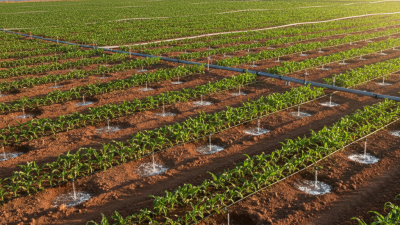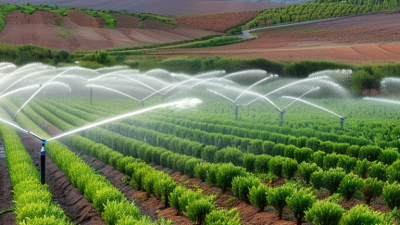
Water efficiency is moving from a technical preference to an urgent agricultural requirement. The UN World Water Development Report 2024 states that agriculture accounts for roughly 70% of global freshwater withdrawals. FAO AQUASTAT also reports that irrigated land represents about 20% of cultivated farmland, yet produces nearly 40% of global food output. These figures explain why dependable sprinkler and irrigation equipment matters in fields, orchards, greenhouses, and landscaped areas.
China has become an important manufacturing base for pumps, drip lines, sprinklers, filters, valves, controllers, and complete irrigation systems. However, choosing a supplier requires more than comparing catalogue prices. This guide examines ten Chinese companies through product coverage, manufacturing capability, export experience, certifications, customization, and after-sales support. Evidence should include factory audits, test records, installation references, and clear warranty terms. Small details matter: nozzle uniformity, filter mesh quality, pressure stability, and controller protection can determine whether a system performs well after one dry season.
The ranking is not absolute. Supplier strengths differ by project size, climate, crop, and budget. Some companies publish limited performance data, which deserves careful attention. Reported market visibility may also reflect export activity rather than field reliability. For that reason, this introduction combines industry data with practical evaluation criteria. It aims to help buyers identify credible partners, not merely famous names. Local installation skills still matter. Even excellent equipment can underperform when pressure calculations, spacing, or maintenance planning are overlooked.
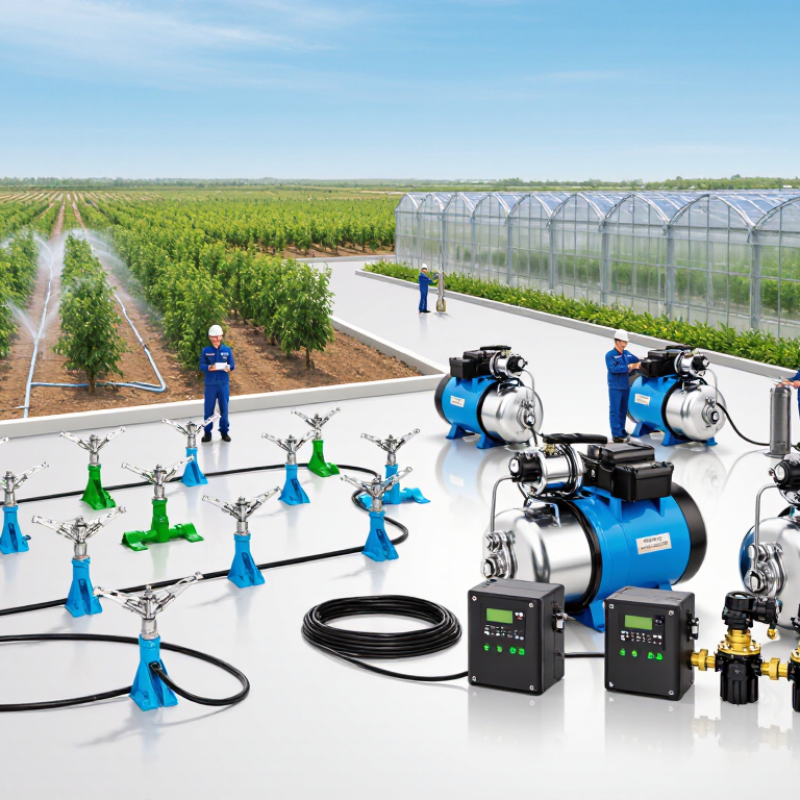
China’s sprinkler and irrigation suppliers are not merely equipment sellers. They connect water sources, crops, controls, and field performance. Their work may include hydraulic design, pump selection, filtration, valves, sprinklers, drip lines, sensors, installation, and maintenance.
The need is substantial. FAO’s AQUASTAT data reports that agriculture accounts for about 70% of global freshwater withdrawals. China’s Ministry of Water Resources reported a farmland irrigation water-use efficiency coefficient of approximately 0.576 in 2023. These figures explain the suppliers’ practical role.
A reliable supplier should calculate pressure loss, match nozzle output, test uniformity, and support seasonal repairs. A shiny catalog is not field evidence. Soil texture, slope, wind, water quality, and crop spacing can change the result. Some supplier claims still need stronger independent verification.
Tips: Request a site survey and a complete hydraulic drawing. Check filtration capacity, spare-part availability, warranty terms, and technician response times. Ask for measured uniformity data from a comparable farm. The Irrigation Association emphasizes proper system design and performance testing, yet many buyers focus only on purchase price. That decision can create blocked nozzles, uneven wetting, and wasted pumping energy. Local weather data should also guide scheduling. A supplier offering remote monitoring may help, but connectivity failures remain possible. Human inspection still matters.
China’s irrigation supply sector covers far more than basic sprinklers. Suppliers commonly produce impact sprinklers, gear-driven rotors, and micro-sprinklers for orchards, landscapes, and open fields. Drip tape and pressure-compensating emitters support vegetables, nurseries, and water-sensitive crops. Each type suits a different pressure range, spacing plan, and soil condition.
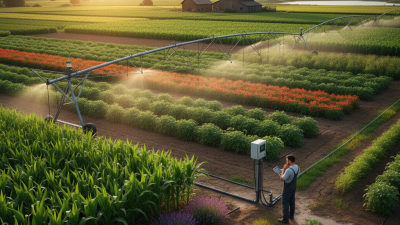
Large farms often need center-pivot systems, linear-move machines, or hose-reel sprinklers. These systems cover wide areas with less daily labor. Smaller sites may use PVC or polyethylene pipes, valves, filters, pumps, and fertigation units. Automated controllers can adjust watering by schedule, rainfall, soil moisture, or flow data. Good suppliers also provide nozzles, connectors, pressure regulators, and replacement seals. Small parts decide reliability.
From field inspections, I have learned that product lists rarely tell the whole story. I would not trust a catalog alone. Ask for flow charts, pressure-test records, material specifications, and installation guidance. Check whether the supplier can match pump output with nozzle demand. Request sample testing under local water quality and climate conditions. This step may reveal uneven coverage or fragile fittings. It is easy to overlook. Reliable suppliers explain maintenance intervals, spare-part availability, and warranty limits clearly. Still, even a strong design can fail when filters clog or workers skip inspection. A practical supplier should discuss those weaknesses openly, not promise perfect performance.
Evaluating China’s top sprinkler and irrigation suppliers requires more than comparing catalog prices. A reliable review begins with field experience. Check whether the supplier has handled farms, nurseries, sports grounds, or municipal landscapes similar to your project. Ask for installation photos, operating data, and references from comparable climates. Real projects reveal more than polished brochures.
Technical capability matters every day. Examine nozzle uniformity, pressure tolerance, filtration design, pipe quality, and controller compatibility. Request test reports with clear measurement conditions. A serious manufacturer should explain water flow, coverage radius, material grades, and expected service life. Production consistency also deserves attention. Inspect sample products from different batches when possible. Small molding differences can affect spray patterns.
Trust develops through transparent communication. Evaluate response times, documentation, spare-part planning, and warranty terms before signing an order. A dependable supplier should identify limitations instead of promising perfect performance. Certifications can support credibility, but they do not replace independent verification. Factory audits, third-party inspections, and traceable quality records provide stronger evidence. No scorecard is perfect. I still find that shipping experience and after-sales support are sometimes underestimated. A low purchase price may become expensive when filters clog, controllers fail, or replacement parts arrive late. Compare total operating cost, not only the initial quotation. Look for suppliers willing to adjust designs after site testing, because soil, water quality, wind, and seasonal demand can change the result.
| Rank | Supplier Profile | Main Manufacturing Cluster | Core Product Coverage | Typical Application | OEM / ODM Capability | Quality-System Evidence | Export Readiness | Customization | Overall Score |
|---|---|---|---|---|---|---|---|---|---|
| 1 | Supplier Profile A | Fujian / Zhejiang coastal manufacturing belt | Impact sprinklers, plastic sprinklers, micro-irrigation fittings, garden irrigation kits | Horticulture, landscaping, small and medium farms | High | Documented factory quality procedures; product-level compliance should be verified by batch | Strong container-export capability and multilingual documentation | High | 91/100 |
| 2 | Supplier Profile B | Taizhou / Ningbo industrial zone | Drip tape, dripline, screen filters, venturi injectors, irrigation valves | Row crops, greenhouses, fertigation systems | High | In-process pressure and leakage testing; request ISO and material records before purchase | Experienced with distributor and project-based orders | High | 89/100 |
| 3 | Supplier Profile C | Guangdong Pearl River Delta | Electric solenoid valves, controllers, pumps, timers, smart irrigation accessories | Commercial landscaping, residential irrigation, municipal projects | High | Electrical safety and ingress-protection documentation available by product category | Good small-parcel and mixed-SKU export flexibility | Very High | 87/100 |
| 4 | Supplier Profile D | Shandong agricultural-equipment cluster | Center-pivot components, agricultural sprinklers, hose reels, irrigation pumps | Large-scale agriculture and open-field irrigation | Medium–High | Mechanical performance testing and traceable component inspection recommended | Suitable for full-container agricultural equipment orders | Medium | 85/100 |
| 5 | Supplier Profile E | Jiangsu / Zhejiang plastics corridor | PE irrigation pipe, PVC fittings, lay-flat hose, compression connectors | Farm networks, landscape systems, water-transfer applications | High | Dimensional, tensile and pressure testing should be confirmed against the purchase specification | Established packaging options for overseas distributors | High | 84/100 |
| 6 | Supplier Profile F | Hebei / northern China pipe-manufacturing region | HDPE pipe, irrigation manifolds, filter units, pressure-regulation components | Municipal landscaping, agricultural water distribution | Medium–High | Material-grade and pressure-rating documentation is important for project acceptance | Competitive for bulk orders and engineering projects | Medium | 82/100 |
| 7 | Supplier Profile G | Guangdong / Fujian garden-equipment cluster | Garden sprinklers, hose-end fittings, misting nozzles, household irrigation kits | Residential gardens, nurseries, DIY retail | High | Retail packaging, leak testing and basic product inspection are commonly available | Well suited to private-label and mixed-carton export programs | Very High | 81/100 |
| 8 | Supplier Profile H | Shanghai / Jiangsu precision-manufacturing area | Stainless-steel sprinklers, brass valves, pressure regulators, industrial nozzles | Industrial cooling, high-value crops, commercial landscapes | Medium | Material certificates and dimensional inspection are typically available upon request | Strong technical communication for specification-led projects | Medium | 80/100 |
| 9 | Supplier Profile I | Yunnan / southwestern agricultural region | Greenhouse irrigation kits, micro-sprayers, fertigation accessories, filters | Protected cultivation, flowers, vegetables and nurseries | Medium–High | System-level testing is more important than component certification alone | Suitable for regional project supply and specialized agricultural orders | High | 78/100 |
| 10 | Supplier Profile J | Hunan / central China machinery cluster | Diesel and electric irrigation pumps, mobile sprinklers, hose-reel systems | Remote farms, emergency watering, large open-field operations | Medium | Performance curves, motor documentation and factory acceptance testing should be requested | Good for equipment-based shipments and turnkey irrigation packages | Medium | 76/100 |
China’s Top 10 Sprinkler and Irrigation Suppliers
China’s irrigation supply market serves farms, nurseries, sports grounds, and municipal landscapes. A reliable top-ten list should assess more than factory size. It should compare flow accuracy, pressure stability, filtration, spare parts, and export documentation. FAO’s AQUASTAT data indicates that agriculture uses about 70% of global freshwater withdrawals. This explains the growing demand for controlled irrigation rather than unrestricted flooding.
The strongest Chinese suppliers usually provide drip lines, impact sprinklers, center-pivot components, valves, pumps, and automated controllers. Their practical value appears in the field: even water distribution across a 100-metre crop row, sealed connectors after repeated pressure cycles, and filters that remain serviceable during muddy seasons. The World Bank has repeatedly linked improved agricultural water management with higher productivity and greater climate resilience. However, catalogue claims need independent testing. Field reality disagrees. A supplier may show excellent laboratory efficiency but perform poorly with hard water, unstable electricity, or untrained installers. Buyers should request ISO-related quality records, product test reports, warranty terms, and references from similar climates. China’s top ten should therefore be judged by verified performance, technical support, and lifecycle cost. Price alone is a weak signal. My assessment would remain provisional without farm-site inspections, because irrigation results depend on design, maintenance, and local water conditions.
When comparing China’s top 10 sprinkler and irrigation suppliers, do not rank them by catalog size alone. The right supplier must fit your soil, water source, crop, and installation conditions.
Ask for drawings based on your actual field dimensions. A supplier that sells every component may still lack useful design experience. Request project references from climates similar to yours.
Check pressure requirements, flow rates, filtration, nozzle uniformity, and controller compatibility. Ask how the supplier tests these values before shipment.
Reliable teams provide material specifications, test records, and clear replacement procedures. For a greenhouse, small pressure changes can create visibly uneven watering.
For open fields, wind exposure and pipe length matter more than attractive product photos. Avoid vague promises about water savings. Require measurable assumptions.
Before signing, confirm lead times, packaging, spare parts, installation guidance, and after-sales response hours.
A video call with an engineer can reveal more than a polished brochure. Ask who handles design changes when site conditions differ from the original plan.
I have seen projects suffer because buyers checked unit prices but ignored filtration and maintenance labor. That mistake is easy to repeat.