Why Choose Micro Irrigation Systems for Global Buyers?
Global buyers are rethinking how irrigation supports food production, landscaping, and commercial agriculture. Micro irrigation delivers water directly to plant roots through emitters, drip lines, or small sprinklers. This approach can reduce evaporation, runoff, and unnecessary wetting between crop rows. In a dry field, each emitter releases a controlled stream beside the stem. The result is measurable, but never automatic.
Dr. Daniel Hillel, a respected soil and water scientist, stated, “The challenge is to produce more food with less water.” His observation reflects the central value of micro irrigation for international purchasers. Properly designed systems can improve water-use efficiency, support healthier root zones, and lower labor demands. They also allow fertigation, when compatible equipment and agronomic guidance are available. However, product quality varies widely across suppliers. Buyers should examine emitter uniformity, filtration requirements, pressure tolerance, UV resistance, and replacement-part availability. Standards such as ISO 9261 can provide useful technical reference points.
The best system is not always the most expensive one. It must match water quality, crop spacing, terrain, climate, and maintenance skills. A dusty farm may need stronger filtration than a greenhouse installation. Small mistakes matter. Poor pressure control can leave one row saturated and another visibly dry. Global buyers should request test data, installation guidance, warranty terms, and field references before making a decision. Micro irrigation is powerful, but it is not a magic fix. Reliable results come from sound design, honest specifications, and regular inspection. That part is often underestimated.
What Are Micro Irrigation Systems and How Do They Work?
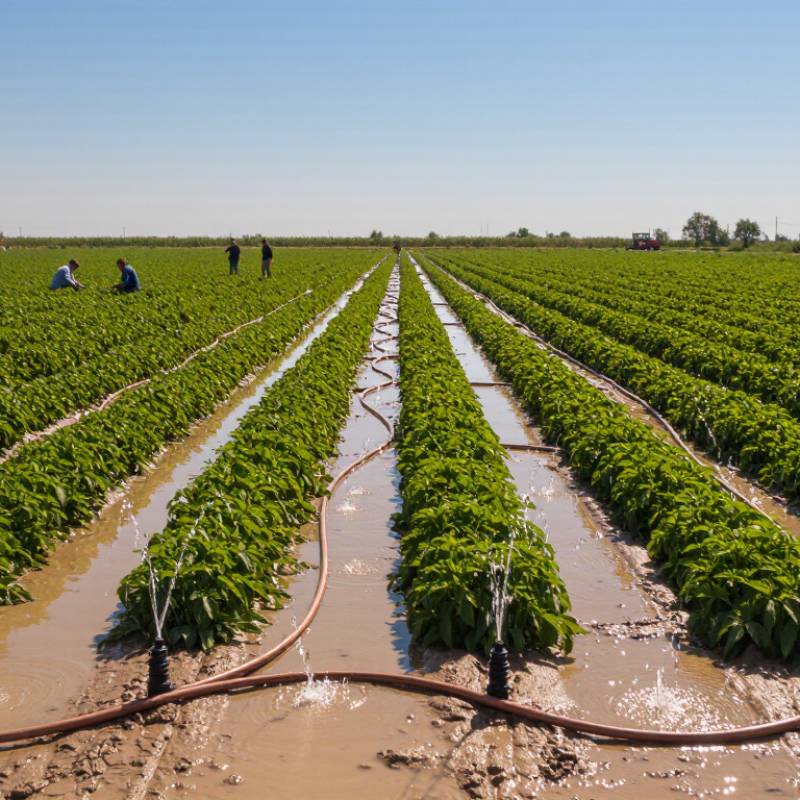
Micro irrigation systems deliver water slowly and directly to plant roots. Common components include a pump, filter, pressure regulator, mainline, and small emitters. Drip lines release measured drops near each plant, while micro-sprinklers spread a gentle spray over a limited area. This design reduces runoff and keeps dry soil nearby.
In field use, water travels through the main pipe before entering narrower tubes. Each emitter controls the flow, often around one to several liters per hour. Farmers can adjust watering schedules according to soil texture, crop age, and weather. A vegetable bed may need short daily cycles, while young trees need deeper, less frequent watering. The system can also carry soluble nutrients, but poor calibration may damage roots or waste fertilizer. No setup is perfect.
Tips: Check filters every week during dusty seasons. Flush the lines before planting and after repairs. Walk the field while irrigation runs. A blocked emitter often reveals itself through one wilted plant. Test pressure at the farthest line, not only near the pump. Buyers should also confirm pipe sizes, connector standards, spare parts, and local water quality requirements. These details affect maintenance more than attractive product photos. In my experience, simple layouts are easier to repair, though very large farms may need automated controls and professional design checks.
Why Choose Micro Irrigation Systems for Global Buyers? - What Are Micro Irrigation Systems and How Do They Work?
| Data Dimension | Typical Micro Irrigation Information | Why It Matters to Global Buyers | Practical Selection Guidance |
|---|---|---|---|
| Definition | A localized irrigation method that delivers water slowly and directly to the root zone through emitters, micro-sprays, or porous tubing. | Water is applied where crops need it instead of wetting the entire field. | Choose the technology according to crop spacing, soil type, terrain, water quality, and available pressure. |
| Main operating principle | A pump or elevated tank supplies pressurized water through a filter, regulator, mainline, submain, and distribution lines. | A modular design allows systems to serve small gardens, greenhouses, orchards, and large fields. | Confirm pipe sizes, connection standards, pressure requirements, and spare-part availability before purchasing. |
| Common emitter flow rate | Approximately 1–8 liters per hour per point for many drip applications; the actual rate depends on emitter design and pressure. | Low flow reduces runoff and allows water to infiltrate gradually. | Use lower-flow emitters for sandy or sloped sites when frequent irrigation is practical; verify manufacturer test data. |
| Typical working pressure | Many drip systems operate around 0.7–2.5 bar, while micro-sprays may require different pressure ranges. | Correct pressure supports uniform discharge and prevents damage or poor coverage. | Select pressure regulators and pressure-compensating emitters where elevation changes or long rows may cause uneven flow. |
| Potential water-use efficiency | Field performance commonly reaches about 80–95% application efficiency when the system is well designed, maintained, and scheduled. | Less water may be lost to evaporation, wind drift, and surface runoff than with less localized methods. | Treat efficiency as site-specific; measure pressure, flow, soil moisture, and irrigation uniformity rather than relying only on rated values. |
| Suitable crop categories | Vegetables, row crops, fruit trees, vines, nursery plants, greenhouse crops, landscape beds, and container plants. | The delivery point can be matched to individual plants, rows, beds, or containers. | Use inline dripline for closely spaced rows, point-source emitters for orchards, and micro-sprays where broader wetting is needed. |
| Soil compatibility | Works across sandy, loamy, and clay soils, but emitter spacing and irrigation frequency must be adjusted to soil infiltration and water movement. | Proper design reduces dry spots in coarse soil and prolonged saturation in heavy soil. | Use shorter, more frequent cycles in sandy soil and longer intervals with careful monitoring in clay soil. |
| Filtration requirement | Filtration is normally essential because small emitter passages can clog from sediment, algae, or organic matter. | A suitable filter improves reliability and extends the usable life of the distribution network. | Match screen or disc filtration to the smallest passage in the system and the quality of the water source. |
| Fertigation capability | Water-soluble fertilizers can be injected into the irrigation stream when compatible equipment, backflow protection, and proper flushing are provided. | Nutrients can be delivered near active roots and applied in smaller, more controlled doses. | Check local regulations, chemical compatibility, injection accuracy, and backflow-prevention requirements. |
| Automation options | Systems may use timers, solenoid valves, flow meters, pressure sensors, soil-moisture sensors, or weather-based controllers. | Automation can reduce manual labor and improve scheduling consistency. | For remote sites, prioritize dependable power, simple controls, local technical support, and manual override functions. |
| Maintenance tasks | Clean filters, flush laterals, inspect emitters, check leaks, monitor pressure, and protect pipes from physical or animal damage. | Routine maintenance helps preserve uniform water distribution. | Build a maintenance schedule around water quality, operating hours, seasonal conditions, and the availability of replacement parts. |
| Best-fit buyer priorities | Water conservation, targeted irrigation, scalable installation, reduced weed-promoting wet areas, and compatibility with irregular field layouts. | Micro irrigation can support efficient resource management when design and operation are appropriate. | Compare total ownership cost, installation labor, filtration needs, energy use, durability, warranty terms, and after-sales support. |
Note: Flow rates, pressure ranges, and efficiency figures are typical planning values rather than universal specifications. Final system performance depends on water quality, terrain, climate, soil, crop requirements, installation quality, and operating practices.
Related Posts
-
Top 10 Types of Plant Irrigation Systems Which Is Best?
-
10 Plant Irrigation Tips Every Global Buyer Should Know
-
Top Benefits of Drip Irrigation for Global Farmers?
-
Best Drip Line Irrigation Systems for Efficient Watering?
-
2026 Top Dig Drip Irrigation Types for Global Buyers
-
Best Sprinkler and Irrigation Systems for Efficient Watering?