In 2026, spray irrigation remains a practical choice for farms, gardens, sports fields, and commercial landscapes. Yet choosing the right system is not as simple as comparing spray distance or advertised water savings. No single model fits every soil, crop, climate, or budget.
Dr. Charles M. Burt, a respected irrigation engineer and founder of the Irrigation Training and Research Center, wrote, “Irrigation is the controlled application of water for agricultural production.” That definition still matters. A strong spray irrigation system should place water evenly, reduce runoff, and work reliably under real field conditions. It should also be easy to inspect when a nozzle clogs at sunrise or a pressure regulator fails during a dry week.
This guide examines leading spray irrigation systems expected to stand out in 2026. The review considers distribution uniformity, pressure control, nozzle flexibility, automation, maintenance demands, and long-term operating costs. Smart controllers receive attention, but technology alone does not guarantee better irrigation. A poorly adjusted system can waste water while displaying impressive data.
Field experience often reveals uncomfortable details. Wind can distort a spray pattern within minutes. Hard water may block delicate nozzles. Even an efficient system can perform poorly when installation is rushed.
The rankings are therefore useful, not absolute. They reflect practical performance, current design improvements, and evidence from irrigation professionals. Readers should still test pressure, inspect coverage, and study local water conditions before purchasing. That extra work may feel slow. It can prevent expensive mistakes later.
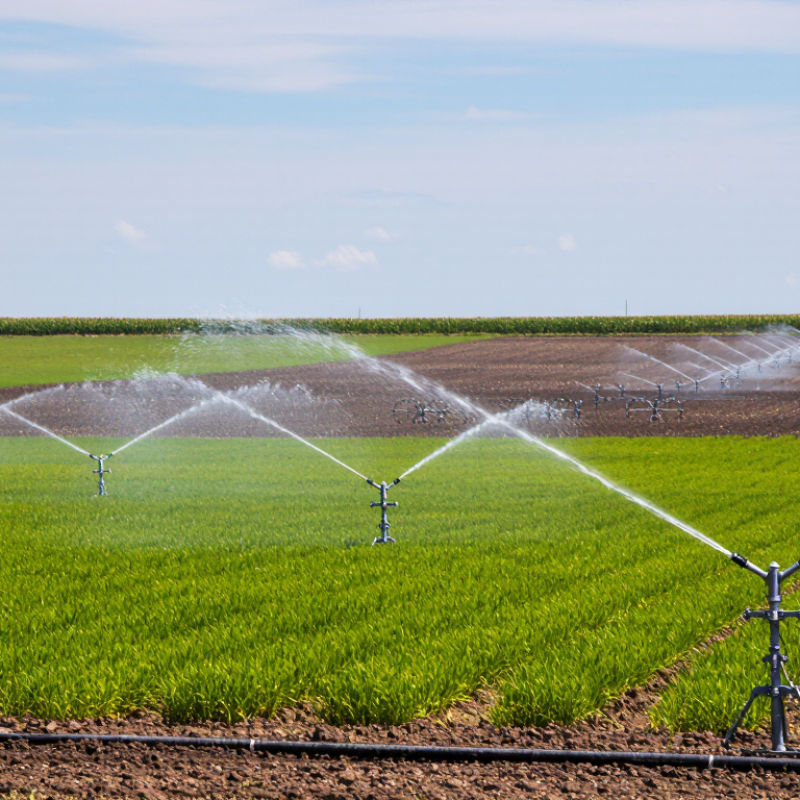
Spray irrigation applies water through pressurized nozzles, creating droplets across a planned area. Pressure controls throw distance, droplet size, and distribution quality. Low pressure may leave dry edges, while excessive pressure can create mist and uneven losses. A practical setup usually needs measured pressure at the nozzle, not only at the pump.
Coverage depends on spacing, wind, soil texture, and spray pattern. Overlapping patterns often improve uniformity, but too much overlap wastes water.
In 2026, common system categories include fixed spray layouts, movable sprinkler lines, rotating impact units, low-pressure micro-sprays, and sensor-assisted systems. Each category suits different field shapes and maintenance abilities.
Rectangular beds may benefit from fixed spacing. Irregular gardens often need adjustable or movable heads. Sensor control can respond to soil moisture, though sensors still require calibration and occasional human judgment.
Tips:
Test one zone with empty collection cups. Compare the water depth after a short cycle. Adjust nozzle angle, pressure, and spacing before expanding the layout. Check for clogged filters, bent risers, and wind drift weekly during active use. Keep records of runtime and weather conditions. They reveal patterns that memory misses. I have found that “maximum coverage” is not always efficient; a slightly smaller wetting area may protect nearby paths and reduce runoff. Some designs look precise on paper but perform differently after installation. Recheck them in real conditions.
What Are the Top Spray Irrigation Systems in 2026?
Agriculture accounts for roughly 70% of global freshwater withdrawals, according to FAO AQUASTAT data. This is a global average, not a universal rule. In dry regions, irrigation can dominate local water demand and intensify competition among farms, cities, and ecosystems. The World Resources Institute’s 2023 Aqueduct Water Risk Atlas identified 25 countries facing extremely high annual water stress. These figures make spray irrigation efficiency a practical necessity, not just a technical preference.
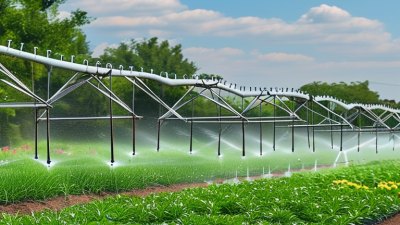
Center-pivot and linear-move systems remain strong choices for large, level fields. Low-pressure sprinklers can reduce pumping demand when layouts and operating pressures are carefully matched. Solid-set systems offer flexible coverage for smaller or irregular plots. USDA Natural Resources Conservation Service guidance emphasizes pressure control, nozzle selection, and irrigation scheduling. Soil sensors and weather-based controls can prevent watering before rainfall. Small details matter.
However, no system is automatically efficient. Wind drift, clogged nozzles, uneven pressure, and poor timing can waste substantial water. Field audits often reveal weaknesses that product specifications overlook. A highly automated system may still overwater if its sensors are badly placed. That is an uncomfortable limitation. In 2026, the better decision is not simply choosing the newest spray equipment. It is matching system design, field conditions, energy costs, and local water limits with measured performance.
| System type | Typical application efficiency* | Typical operating pressure | Best-fit farm conditions | Water-saving strengths | Main limitations | 2026 suitability |
|---|---|---|---|---|---|---|
| Center pivot | 75–90% | Typically 100–300 kPa at the pivot inlet | Large, relatively level fields growing cereals, forage, oilseeds, and vegetables | Uniform coverage; application can be adjusted by speed, pressure, and nozzle package | Wind drift, evaporation, wheel-track issues, and reduced suitability for irregular fields | Excellent for large fields with automation and weather-based scheduling |
| Linear move | 70–85% | Typically 100–300 kPa at the inlet | Large rectangular fields where water must be distributed across the full width | High field coverage with less untreated corner area than a center pivot | Requires suitable field layout, guidance, and careful alignment; movement can be affected by soil conditions | Very good where field geometry favors straight-line travel |
| Solid-set sprinkler | 70–85% | Typically 200–500 kPa | Small to medium fields, orchards, nurseries, and crops needing flexible blocks | Can irrigate irregular areas and deliver frequent, controlled applications | Labor and capital requirements for moving or maintaining pipe and sprinkler sets | Good for diversified farms and irregular field boundaries |
| Micro-sprinkler | 80–90% | Typically 100–250 kPa | Orchards, vineyards, berry crops, nurseries, and high-value specialty crops | Low-volume application near the root zone; supports precise scheduling and fertigation | Filters, emitters, and small nozzles require regular maintenance; less suitable for broad-acre crops | Excellent where water is scarce and crop value justifies precision |
| Traveling gun | 60–75% | Typically 400–700 kPa | Temporary irrigation of pasture, forage, field crops, and fields without permanent infrastructure | Portable and adaptable; lower installation commitment than fixed systems | Higher pressure and energy demand; greater wind drift and evaporation risk | Situational where portability matters more than maximum efficiency |
| Low-elevation spray application | 80–90% under suitable conditions | Often lower than conventional high-pressure sprinklers | Center-pivot or linear-move systems operating in dry, low-wind conditions | Places water closer to the soil surface, reducing droplet exposure and pressure-related energy use | May be affected by residue, soil intake, crop height, wheel tracks, and poor land leveling | Excellent upgrade for suitable mechanized systems |
Source note: Typical performance ranges are synthesized from agricultural irrigation engineering guidance, including FAO irrigation and drainage references and U.S. Department of Agriculture irrigation management guidance. Values are indicative ranges, not guaranteed field results.
Choosing among rotors, fixed sprays, MP rotators, and smart nozzles depends on lawn size, soil, pressure, and wind. After checking coverage with catch cups, I usually reserve rotors for broad turf areas. Their rotating streams reach farther and apply water slowly, reducing surface runoff on healthy soil. They can still perform poorly when pressure is weak or spacing is careless.
Fixed sprays suit narrow beds and small, shaped planting areas. Their short range is useful, but their faster application rate can create puddles. MP rotators use several rotating streams and generally water more slowly than fixed sprays. They often improve uniformity, though they need longer run times. That detail is easy to miss.
Smart nozzles add pressure control, flow monitoring, or sensor-based adjustments. They can compensate for changing conditions and expose leaks earlier. However, “smart” does not mean automatic perfection. A blocked filter, tilted head, or badly placed sensor can still waste water. In windy gardens, even advanced nozzles lose accuracy. I would test each zone during calm weather, then review soil moisture below the surface. Sandy soil may need shorter, more frequent cycles, while clay needs pauses for infiltration. My own installations have taught me one uncomfortable lesson: elegant equipment cannot rescue poor spacing. A few minutes with a measuring tape often improves irrigation more than expensive controls.
The most efficient spray irrigation systems in 2026 will depend on their controllers, not only their nozzles. Weather-based WaterSense controllers adjust watering after reading rainfall, temperature, wind, and seasonal plant demand. The U.S. Environmental Protection Agency reports that certified controllers can reduce landscape irrigation use by about 15%, with savings approaching 20% in suitable conditions. That difference matters when a lawn receives several short cycles each week.
Small details decide real performance. A flow sensor can flag a broken sprinkler before it floods a driveway. Pressure-regulated spray heads help prevent misting on windy mornings. Rain shutoff devices also stop unnecessary cycles after a storm. EPA data indicates outdoor water use can represent about 30% of household consumption nationally, and much more in dry regions. However, savings are not automatic. A poorly placed sensor, compacted soil, or blocked nozzle can undermine an advanced controller. Field results remain uneven.
A practical setup should record monthly meter readings, rainfall, and controller runtime. Compare two similar months, not one unusually wet week. The Water Research Foundation’s residential end-use research also shows that outdoor demand varies sharply by climate, landscape design, and household behavior. That makes a fixed savings promise unreliable. In my assessment, a 20% reduction is achievable for some properties, but careful calibration is still the unglamorous requirement. Test each zone with a container and check for runoff after five minutes.
In 2026, the best spray irrigation system depends less on popularity and more on field conditions. I inspect soil texture, crop height, wind exposure, and available water pressure before choosing equipment. Sandy soil usually needs shorter, more frequent applications because water drains quickly. Clay soil requires slower spray rates to prevent puddling and surface runoff. Uneven ground may need pressure-compensating emitters for consistent coverage.
Crop structure also matters. Low-growing vegetables can use fine, low-angle sprays, while taller crops often need risers above the foliage. For orchards, rotating or micro-spray patterns can wet the root zone without soaking every aisle. Pressure should match the nozzle design, not merely the pump’s maximum rating. Too much pressure creates mist and wind drift. Too little pressure leaves dry strips. That gap is easy to miss.
Maintenance often determines the real cost. Systems with accessible filters, flush valves, and replaceable nozzles are easier to manage during a busy season. I check clogged screens weekly when surface water is used. Clean water helps, but it is not a guarantee. My first layout used uniform nozzle spacing across a sloped field, and the lower rows received noticeably more water. A pressure test later exposed the mistake. Now I measure flow at several points, record seasonal changes, and leave room for adjustment. Perfect coverage is rarely permanent.