How to Choose Drip Tube Irrigation Suppliers Worldwide?
Choosing a drip tube irrigation supplier is not simply a price comparison. It is a decision about crop safety, water efficiency, installation time, and long-term maintenance. A supplier may offer attractive prices, yet weak tubing can split under pressure or clog after a few irrigation cycles. That failure rarely appears in a product catalogue. It appears in a dry crop row.
Dr. Jack Keller, a pioneer of micro-irrigation, stated, “The goal of irrigation is to provide the right amount of water at the right time and in the right place.” This principle should guide every worldwide supplier evaluation. Buyers need to examine emitter spacing, wall thickness, flow uniformity, filtration requirements, pressure tolerance, and material quality. They should also request test reports, technical drawings, production details, and clear warranty terms. Samples matter. A short field trial can reveal uneven discharge, brittle plastic, or poor connector fit before a full container arrives.
Local conditions change the answer. Sandy soils, recycled water, steep fields, and long lateral runs demand different tube designs. A supplier serving vineyards may not understand greenhouse vegetables. A factory with modern equipment may still provide slow technical support. That part is often underestimated.
No supplier is perfect. Even careful buyers can overlook shipping delays, replacement parts, or communication gaps. The better approach is to compare evidence, not promises. This guide explains how to assess drip tube irrigation suppliers across regions, verify their claims, and select a partner that supports reliable irrigation beyond the first purchase.
What Is Drip Tube Irrigation and Why Does Supplier Choice Matter?
How to Choose Drip Tube Irrigation Suppliers Worldwide?
What Is Drip Tube Irrigation and Why Does Supplier Choice Matter?
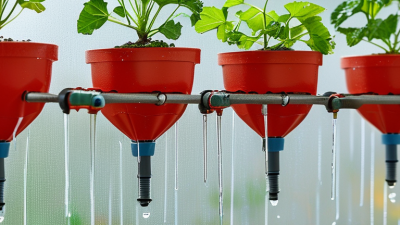
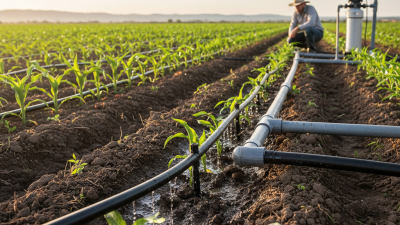
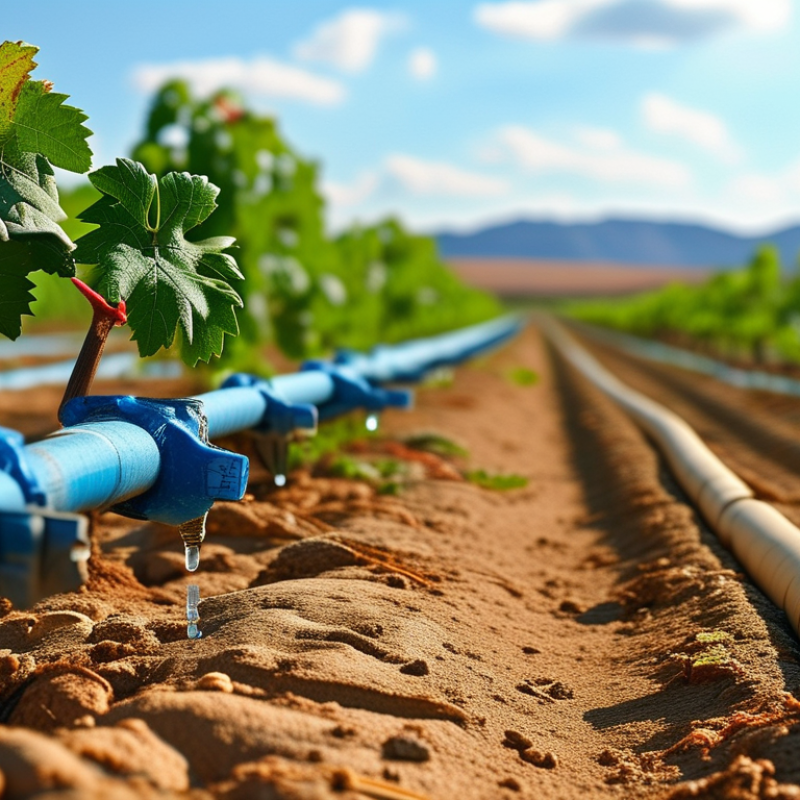
Drip tube irrigation delivers water slowly through small emitters near plant roots. It reduces evaporation, runoff, and unnecessary wetting between crop rows. The FAO AQUASTAT database reports that agriculture uses about 70% of global freshwater withdrawals. This makes efficient delivery increasingly important. Under suitable conditions, FAO irrigation guidance indicates that drip systems can achieve over 90% application efficiency. However, efficiency depends on design, filtration, pressure, and maintenance. The tube alone cannot solve poor water management.
Supplier choice directly affects crop consistency and operating costs. Inspect emitter spacing, flow-rate tolerance, wall thickness, and resistance to ultraviolet exposure. Ask for laboratory test records, production traceability, and clear warranty terms. A reliable supplier should explain filtration requirements for your water source. They should also provide installation guidance and replacement support. In field use, even a small flow variation can create visibly uneven growth. This detail is easy to underestimate.
Tips: Request samples before ordering. Test them under your actual pressure and water conditions. Check whether connectors fit securely. Review independent quality certificates, not only sales claims. Compare total operating cost, including filters, repairs, shipping, and labor. No supplier is perfect. A transparent supplier admits limitations and helps adapt the system. That honesty may matter more than the lowest quotation.
Which Types of Drip Tube Suppliers Serve Global Markets?
Global drip tube suppliers usually fall into four practical groups: manufacturers, regional distributors, irrigation integrators, and OEM producers. Manufacturers offer tighter control over wall thickness, emitter spacing, flow rate, and pressure limits. Regional distributors add local warehouses, technical support, and replacement parts. Integrators design complete systems for farms, greenhouses, and uneven fields. OEM suppliers can produce private-label tubing, but quality checks become essential.
FAO AQUASTAT reports that agriculture accounts for about 70% of global freshwater withdrawals. This explains the growing demand for measured irrigation. Grand View Research estimated the global drip irrigation market at over USD 9 billion in 2023, with continued expansion expected through the decade. However, market growth does not guarantee reliable products. Buyers should request laboratory flow tests, ultraviolet-resistance data, material specifications, and independent certification.
For international projects, distributors with local stock often reduce delays at planting time. Manufacturers may provide better customization for long rows, recycled-water use, or thin-wall seasonal tubing. Engineering suppliers can inspect pressure differences across a field, which online sellers rarely do well. Ask about filtration requirements, connector compatibility, warranty terms, and after-sales training. Small details matter. I would not choose the lowest quotation without checking actual flow uniformity. Some published claims look impressive, yet field performance can change after heat, sediment, and repeated installation.
How to Compare Tube Quality, Specifications, and Compatibility?
Choosing a drip tube supplier worldwide starts with the tube, not the catalog price.
In field trials, I inspect wall thickness, emitter spacing, and pressure tolerance. A tube that feels flexible may still split after repeated sun exposure. Ask for test reports covering tensile strength, flow uniformity, and aging resistance. Also request production samples from a current batch. Certificates matter, but samples reveal inconsistencies. Small differences can become large irrigation losses.
Compare specifications against your water source and crop layout.
Check nominal diameter, wall thickness, emitter flow rate, operating pressure, and recommended filtration level. Match emitter spacing to plant distance; otherwise, dry gaps or saturated patches may appear. For sandy water, fine filtration is essential, while mineral-rich water demands attention to clogging behavior. Confirm whether connectors, valves, and pumps use compatible dimensions. A technically strong tube can fail when fittings are slightly mismatched. Measure twice.
Supplier reliability includes packaging, traceability, replacement policy, and technical support after delivery.
Ask how rolls are labeled and whether batch records are available. Clear installation guidance should explain flushing, pressure regulation, and seasonal storage. I would also test a short section under actual water conditions before placing a large order. This step costs time. It can prevent an expensive mistake. No comparison is perfect; climate, installation skill, and maintenance habits change results. Leave room to revise your choice.
How to Evaluate Pricing, Shipping, and After-Sales Support?
Choosing drip tube irrigation suppliers worldwide requires more than comparing catalog prices. Request a quotation for the same tube diameter, wall thickness, emitter spacing, and order volume. A low unit price can hide tooling charges, export packaging, or minimum-order requirements. Ask for a complete landed-cost estimate, including duties, insurance, inland transport, and payment fees. I once underestimated the cost of reinforced cartons. That mistake changed the real budget.
Shipping quotes should state Incoterms, port details, transit estimates, and destination charges. Confirm whether tubes are coiled, labeled, and protected from crushing during loading. For a remote farm, one delayed container can disrupt installation for several weeks. Request production lead time separately from ocean transit time. Do not trust optimistic dates alone. Packing photos and tracking milestones provide useful evidence, but they are not guarantees.
After-sales support matters when emitters clog, coils deform, or field pressure differs from test conditions. Ask who handles technical questions and how quickly they respond. Check whether replacement parts, troubleshooting guides, and installation advice are available. A reliable supplier should provide test reports and a clear claim procedure. Contact farms using similar water quality and climate conditions. Still, no supplier prevents every mistake. I would record delivery condition and flow tests before accepting the shipment, although tight schedules sometimes make this step easy to skip.