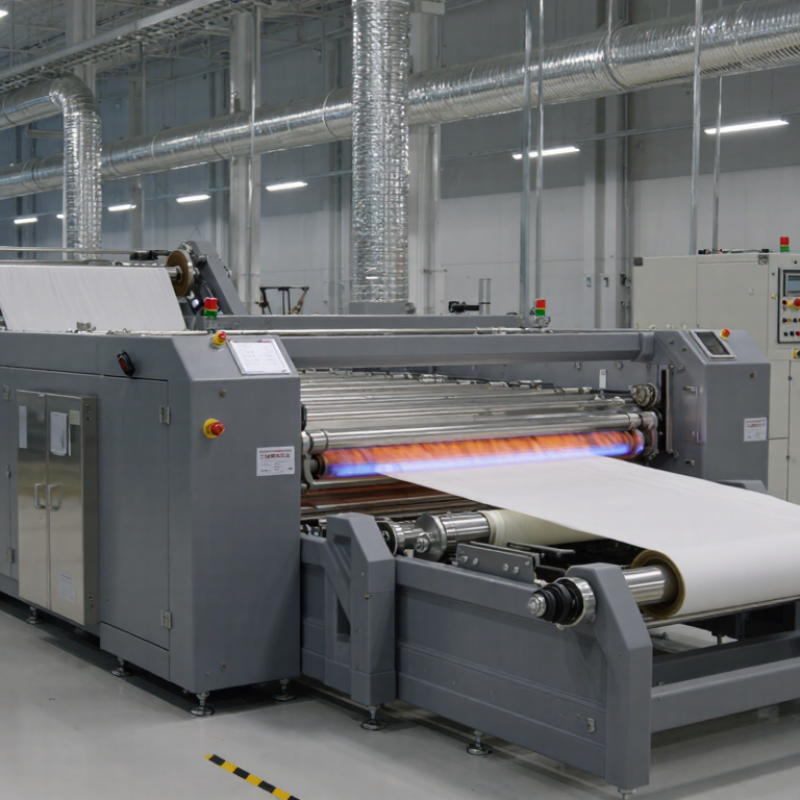
| Lamination Method | Direct flame bonding of flexible foam to textile, film, or nonwoven substrates | Uses controlled heat to melt the foam surface and create an adhesive interface without adding liquid glue. | Most commonly applied to flexible polyurethane foam; surface cleanliness and consistent flame exposure are essential. |
| Primary Foam Type | Flexible polyurethane foam, typically approximately 3–30 mm thick | Provides a broad working range for automotive trim, furniture, apparel, footwear, and protective padding. | Foam density, cell structure, thickness, and flame response must be tested before production approval. |
| Working Width | Common configurations: 1,600–2,400 mm; custom widths may be available | Determines the maximum usable web width and production flexibility. | Actual width depends on the machine frame, burner design, edge-trim method, and customer product requirements. |
| Typical Line Speed | Approximately 10–40 m/min for standard products | Higher speed improves output but requires precise control of flame intensity, web tension, and nip pressure. | Thick foam, heat-sensitive textiles, complex laminates, and high-quality cosmetic surfaces may require lower speeds. |
| Heating Energy Source | Natural gas or LPG, subject to local gas supply and burner configuration | Provides direct, concentrated heat with rapid response and relatively low thermal mass. | Gas pressure, ventilation, combustion air, exhaust, and local safety regulations must be verified during installation. |
| Flame Control | Adjustable burner output with independent control of flame height and exposure position | Helps maintain stable foam surface activation and reduces scorching or incomplete bonding. | Closed-loop temperature or flame monitoring is beneficial for repeatability, especially at variable line speeds. |
| Flame Temperature | Gas flame core temperature may exceed 1,500°C; the foam surface receives controlled heat rather than direct core exposure | Allows rapid surface melting while limiting heat penetration into the foam and facing material. | Actual treatment temperature depends on burner distance, gas-air ratio, line speed, and foam formulation. |
| Nip Pressure | Adjustable rubber or steel nip rollers, commonly controlled by pneumatic or mechanical loading | Ensures intimate contact between the activated foam surface and the facing layer. | Excessive pressure can compress foam permanently; insufficient pressure can cause weak or uneven bonding. |
| Web Tension Control | Unwinding and rewinding with adjustable tension; optional automatic tension control | Reduces wrinkles, telescoping, stretching, and misalignment during continuous lamination. | Important for lightweight fabrics, knitted materials, elastic textiles, and thin films. |
| Bonding Width Accuracy | Typically controlled through web alignment, edge guides, and burner positioning | Improves edge quality and helps maintain a consistent laminated width. | Precision depends on substrate flatness, roll alignment, edge guidance, and operator adjustment. |
| Suitable Textile Substrates | Cotton, polyester, nylon, viscose, blends, knitted fabrics, and selected microfiber materials | Supports applications in upholstery, interior trim, apparel components, luggage, and footwear. | Textiles must tolerate short-duration heat exposure; dyes, coatings, and finishes may affect bonding. |
| Suitable Nonwoven Substrates | Polyester, polypropylene, viscose, and selected fiber blends | Provides economical reinforcement, cushioning, filtration-support layers, and interior backing materials. | Polypropylene and low-melting fibers require careful flame control to prevent shrinkage or surface damage. |
| Suitable Film Substrates | Selected polyurethane, polyester, PVC, and other heat-tolerant films | Can add barrier, decorative, protective, or moisture-resistant functions to foam laminates. | Film thickness, melting point, surface energy, and heat resistance must be confirmed by trials. |
| Material Compatibility: Flexible PU Foam + Polyester Fabric | Generally Suitable | Common combination with good potential for continuous bonding and stable appearance. | Check fabric dye migration, coating adhesion, and resistance to the selected flame exposure. |
| Material Compatibility: Flexible PU Foam + Nylon Fabric | Generally Suitable | Suitable for automotive, sportswear, luggage, and footwear components when heat exposure is controlled. | Nylon may shrink or distort under excessive heat; process trials are recommended. |
| Material Compatibility: Flexible PU Foam + Cotton Fabric | Conditionally Suitable | Can be laminated successfully, but absorbent and textured fabrics may require optimized pressure and speed. | Evaluate scorching, discoloration, moisture content, and surface uniformity before full-scale production. |
| Material Compatibility: Flexible PU Foam + Polypropylene Nonwoven | Conditionally Suitable | Possible for selected constructions with tightly controlled heat input. | Low melting and shrinkage behavior can cause deformation; use a trial sample and conservative settings. |
| Material Compatibility: Rigid Foam | Usually Unsuitable | Rigid foams generally do not provide the flexible, meltable surface required for reliable flame bonding. | Alternative adhesive, hot-melt, thermal, or mechanical bonding methods may be more appropriate. |
| Material Compatibility: PVC or PU-Coated Fabric | Conditionally Suitable | Can provide decorative or protective laminated structures when the coating remains stable under heat. | Test for bubbling, gloss change, plasticizer migration, odor, and coating delamination. |
| Bond Strength Development | Depends on foam formulation, substrate, flame activation, nip pressure, and cooling time | Properly matched settings can produce a continuous bond without separate adhesive application. | Bond strength should be verified using the customer’s intended peel, shear, aging, and wash-resistance tests. |
| Cooling and Stabilization | Ambient cooling section or optional cooled roller arrangement | Helps stabilize the laminate, reduce blocking, and improve dimensional consistency before rewinding. | Cooling requirements increase with thicker foam, higher production speed, and heat-sensitive facings. |
| Control System | PLC-based control with touchscreen operation, speed synchronization, and alarm monitoring | Improves repeatability and simplifies adjustment of line speed, burner output, and roller settings. | Useful functions include recipe storage, emergency-stop circuits, fault alarms, and production parameter display. |
| Safety Features | Flame-failure protection, gas-pressure monitoring, emergency stops, guarding, and exhaust provision | Reduces operational risk during gas-fired thermal processing. | Final safety configuration must comply with applicable local gas, electrical, fire, and machinery regulations. |
| Quality Monitoring | Visual inspection, width measurement, peel testing, and periodic bond-strength verification | Detects wrinkles, scorch marks, poor bonding, edge offset, and surface defects. | For demanding applications, establish documented process windows and incoming-material inspection criteria. |
| Typical Applications | Automotive interiors, furniture upholstery, mattresses, apparel, footwear, bags, acoustic products, and protective padding | Supports lightweight, flexible, and cushioned composite structures. | Application suitability depends on required durability, odor limits, wash performance, flame-retardancy requirements, and appearance. |
| Recommended Pre-Sale Validation | Sample trial using production foam and facing materials | Confirms speed, flame exposure, pressure, appearance, and bond performance before equipment selection. | Record material thickness, density, width, gas type, target output, test methods, and acceptance criteria. |